

There was a leaflet behind the front door. A Barnes Community Association flyer? No.
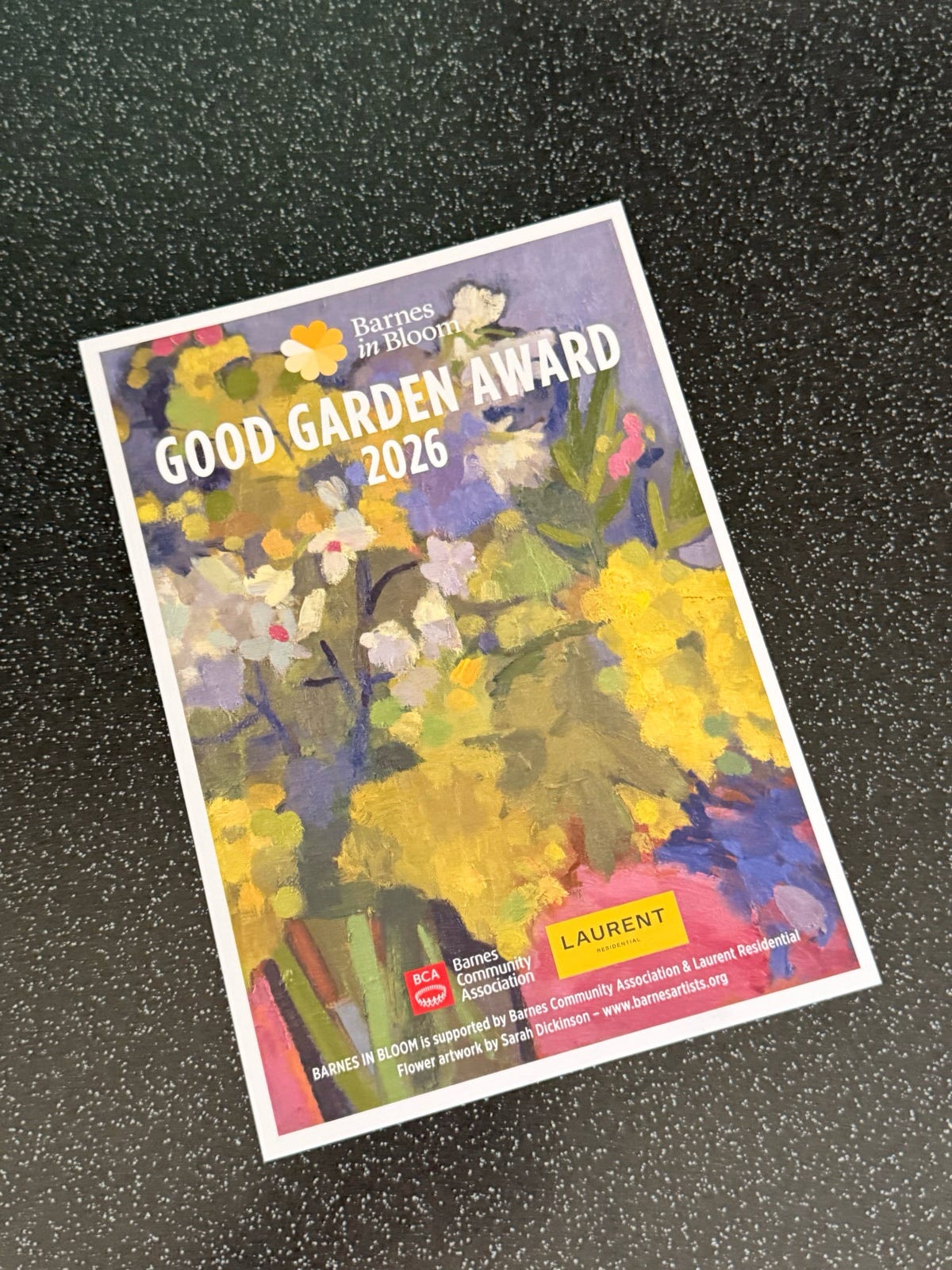
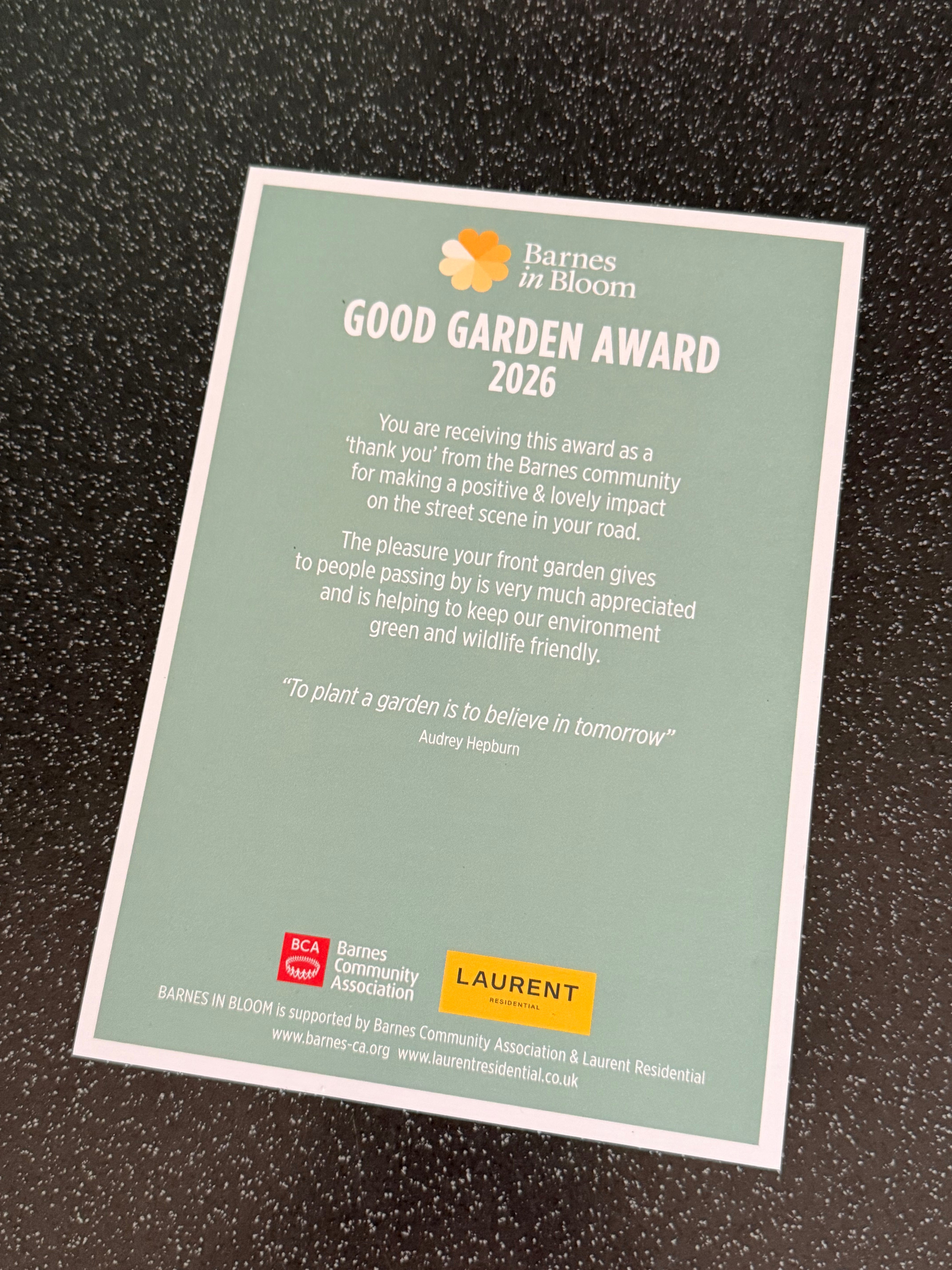
You are receiving this award as a ‘thank you’ from the Barnes community for making a positive and lovely impact on the street scene in your road.
Credit to the Barnes Community Association for organising the scheme, and to Laurent Residential for continuing to support it. The Good Garden Award was first launched in 2017 and remains one of those simple ideas that quietly improves a neighbourhood.
Welcome to Barnes2050, a place-based futures project asking: how do we make sure Barnes - the place and its people - is thriving and climate-ready by 2050?
Notes & thoughts
Let’s ignore the random ampersand…
The Good Garden Award was always going to feature here, award or no award. Honestly.
Front gardens are an understated part of the Barnes landscape. There are thousands of them - maybe as many as 4,800 across the area - and many occupy only a few square metres. Yet taken together they tell us something important about the place.
They are a revealing canvas: a quiet index of our changing relationship with nature, neighbours and the street beyond the front gate.
Collective protection
One reason the awards matter is that they celebrate gardens rather than hardstanding. Too many front gardens have disappeared beneath paving stones.
An unscientific scan of award-winning front gardens across Barnes suggests one common feature: planting and permeable surfaces that allow rainwater to soak into the ground rather than run into drains. (If this is wrong, then please contact Barnes2050)
This matters in Barnes. In a low-lying riverside community with a significant flood risk, every front garden forms part of a much larger drainage system. Individually they are small. Collectively they help absorb rainfall, reduce runoff and make the neighbourhood a little more resilient.
Destination not a route
Front gardens also remind us the private edge of a home can still make a public contribution.
They reveal the residents who see a street as a shared place rather than merely a transport corridor. A destination not a route to somewhere else. One that is - literally - alive and reflecting the changing seasons.
We not me
They are also an ever present indicator whether a neighbourhood still has a culture of stewardship, pride and neighbourly attention.
They show how small acts of care - especially when repeated hundreds of times - can shape the character of a place as surely as the decisions of planners, councils and architects.
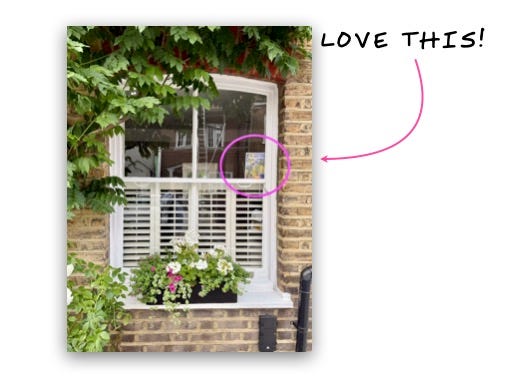
That is why it is so satisfying to see people displaying their awards in the window. Understated pride, Barnes-style.
