

Two photographs taken within thirty minutes. Two locations separated by less than two miles.
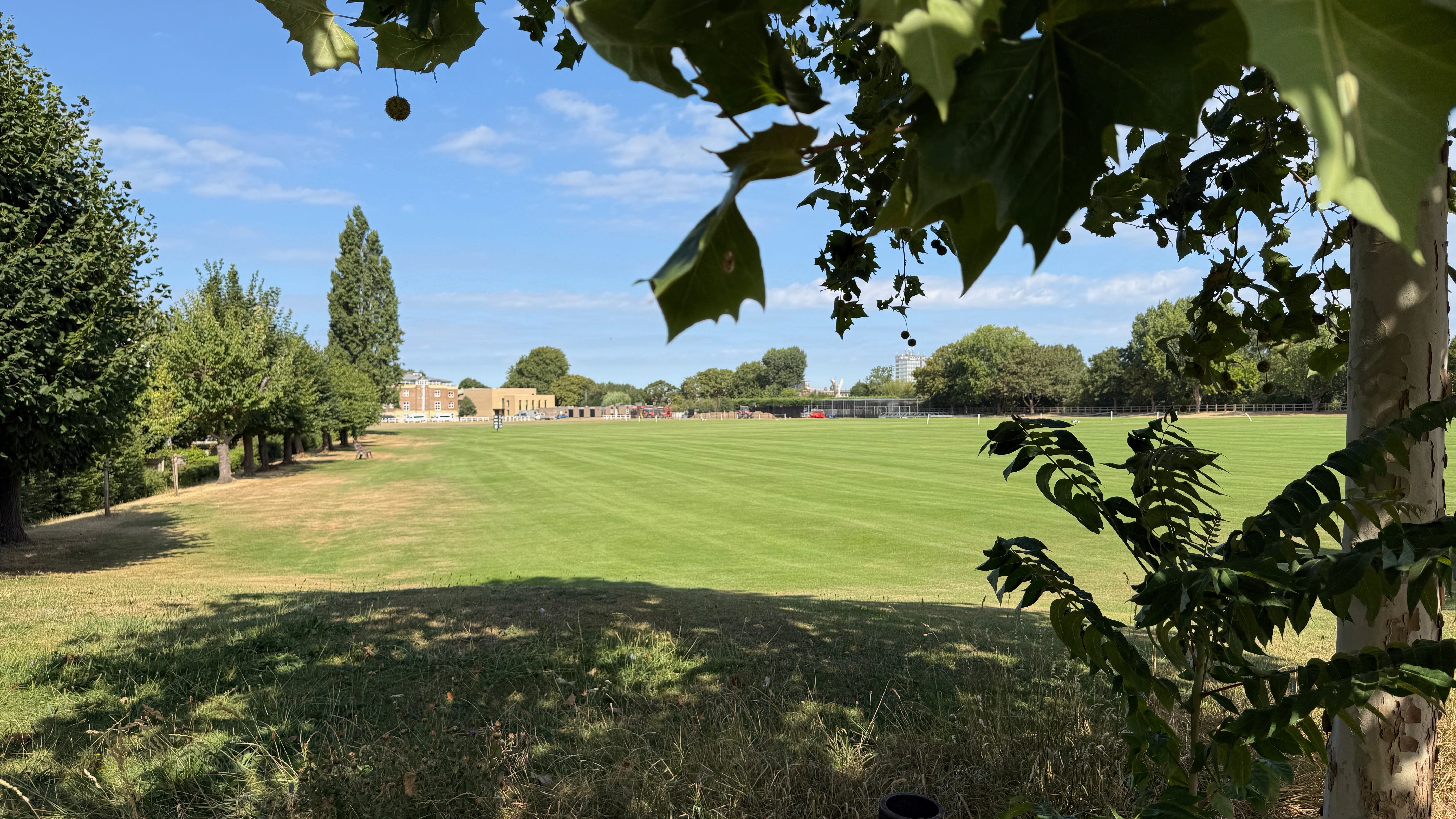
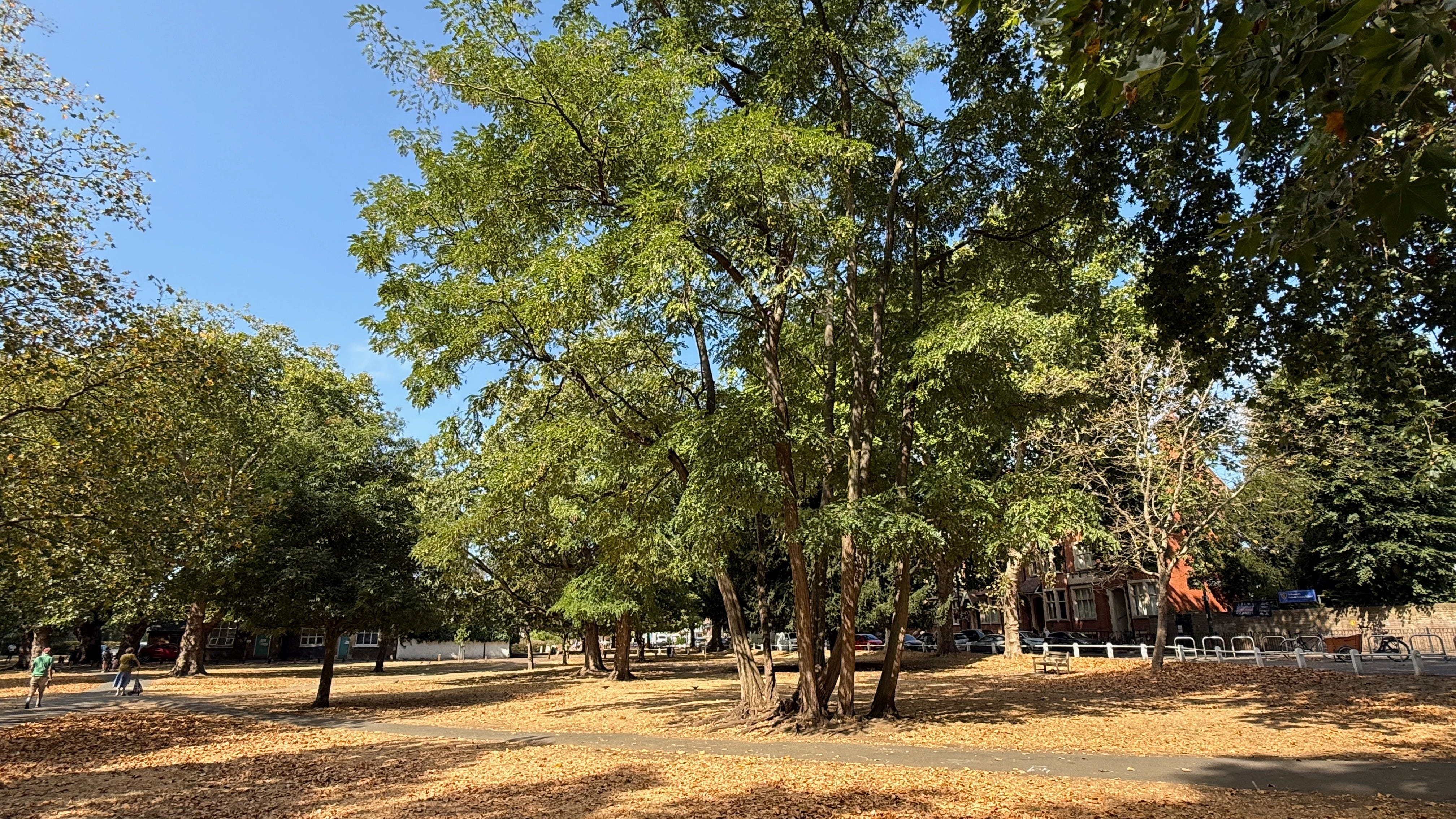
Welcome to Barnes2050, a place-based futures project asking: how do we make sure Barnes - the place and its people - is thriving and climate-ready by 2050?
London is in drought.
At Kew Gardens for the first time since records began in 1871, there was no measurable rainfall at all in July. August has brought little relief.
And yet, as The Guardian put it,
The neatly trimmed grass (at St Paul’s School), with water droplets clinging to each blade, looks like a mirage in the otherwise parched landscape.
The school is sensitive to this look. The school holidays. A vast, lush carpet of green.
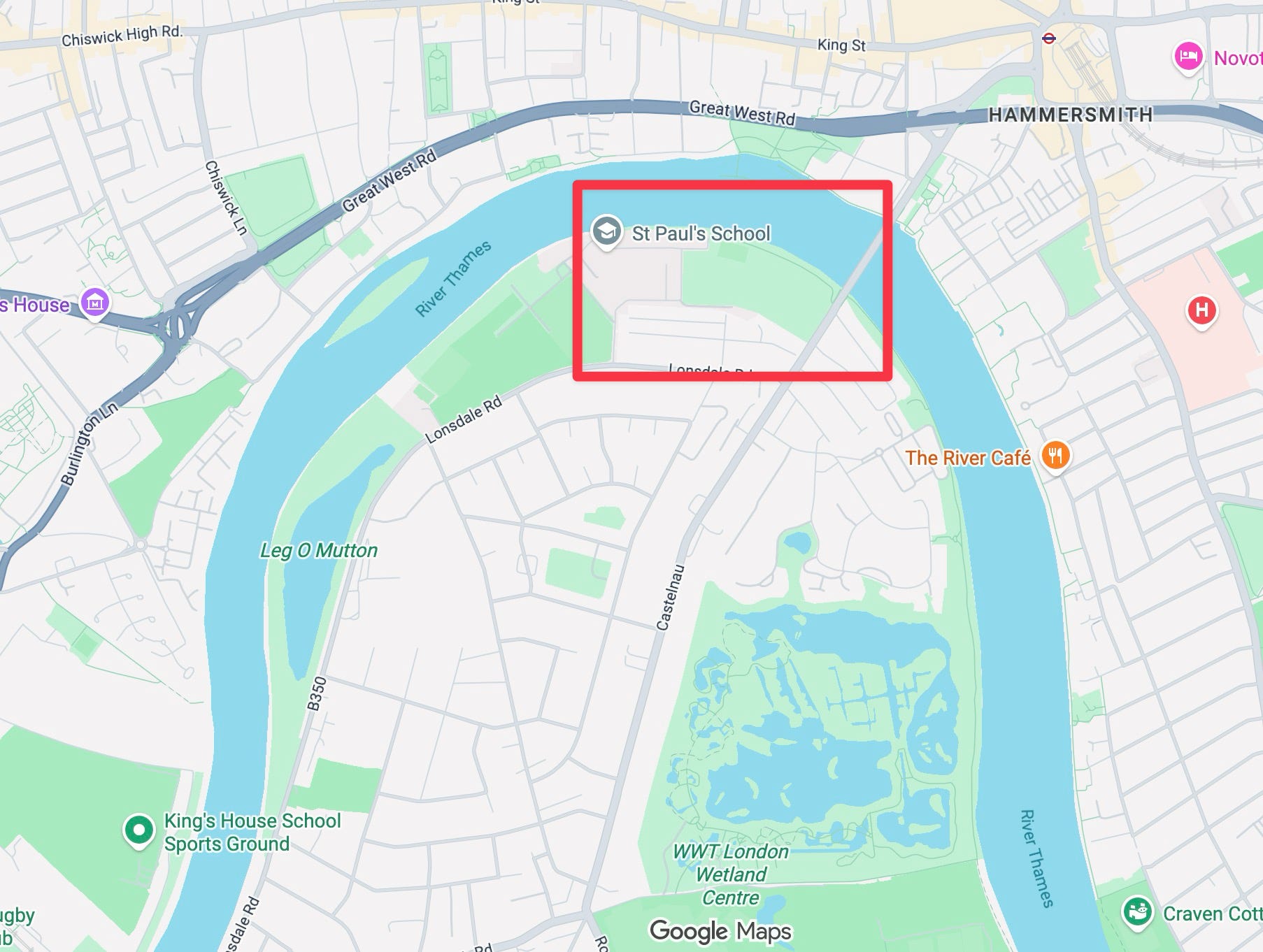
Danielle Pierce, the estates manager, argues their approach is permissable,
We are watering our sports pitches, not the wider grounds, in line with Thames Water’s published guidance.
This water comes from a dedicated standpipe and is not mains drinking water.
The last point is critical to the school’s argument. But it leaves an intriguing question unanswered: what exactly is the water source?
By contrast, Barnes Green is like much of London parkland, burnt.
Private land, green. Public land, brown.
Notes and thoughts
It is tempting to frame this as ‘us versus them’. Selfish actions by a private school that charges up to £57,000 a year. Indeed The Guardian found some who supported that view.
That is wrong.
This sports field is a bright green tribute to an oddity in today’s rules that tells us something else.
The visual impact may appear more significant than its actual effect on the water supply. A commonly quoted summer benchmark for maintaining actively growing turf is around 25mm of water a week. Applied across the roughly 21,000 square metres of green sports fields pictured here, that would amount to about 525,000 litres a week. That’s the equivalent to the normal weekly water consumption of about 136 four-person households.
The colour and volume miss the point.
Should we be learning from St Paul’s?
During a drought, different people and organisations operate under different constraints.
That raises the question, have the regulations adapted adequately to the twenty-first-century climatic conditions? Last month The Met Office said in terms of temperature, ‘.. the climate of the 20th century has now gone’.
Despite the regulations having been updated in 2010, climate conditions have moved sufficiently quickly that rules written only 16 years ago may already produce outcomes that feel badly misaligned with public expectations during drought.
For now, you have a range of responses, all abiding by the law.
Good citizens will follow the rules and fret about letting their lawns die.
On the allotments where I help, you can see plot-holders follow the spirit as much as the letter of the restrictions, carrying buckets and watering cans even though hosepipes can still legally be used for food crops in some circumstances.
St Paul’s School, meanwhile, continues to water its sports pitches. The Temporary Use Ban doesn’t apply to them because water comes from a dedicated standpipe and is not mains drinking water. In a drought-prone twenty-first-century London, the school appears to have access to a resilient water supply that its neighbours — you and me — don’t.
And that’s the twist.
St Paul’s approach might be visually jarring, legally compliant and potentially sensible.
If the school has invested in a borehole, rainwater harvesting, grey-water system or some other alternative supply, then St Paul’s might actually be behaving as any civic-minded twenty-first-century business or organisation should.
With one eye on 2050, the question you should be asking when you see the green playing fields is this: if the school can maintain 21,000 square metres of green space without using mains drinking water during a drought, why can’t more of Barnes do the same?
What sort of weather can we expect in Barnes over next 25 years?

Climate change often hides in plain sight. Its effects accumulate quietly: increasing the cost of food, nudging up insurance. It’s easier to understand if we look ahead to 2050, and think about how it might feel to live in Barnes by then.