

SUVs should face higher parking charges in Richmond’s residential areas. The charges should reflect a car’s size and/or emissions.
The London Assembly agrees. The Green Party supports the idea. As of August 2025, Richmond’s Liberal Democrat-led council does not. Bath council in the west country, also boasting a Liberal Democrat super majority, has implemented such a scheme.
This proposal is part of a wider Manifesto for a better Barnes: a collection of ideas grounded in local insight, climate responsibility and a people-first approach. You’ll find the full list of proposals, along with the thinking behind them, throughout this section.
Welcome to Barnes2050, a place-based futures project asking: how do we help Barnes - the place and its people - thrive and be climate-ready by 2050? If this is your first visit, you might want to start here.
Growth in SUV sales
Sports Utility Vehicles (SUVs) are now the best-selling type of new car in the UK. Along with 4x4s and they make up nearly a third of all cars on the road.
What’s more, like most cars they’re growing in size. Cars sold in the UK are growing in size by an average of 1cm every two years. The Vauxhall Corsa has widened by 24cm since its debut. The Ford Fiesta is 19cm broader than it was in 1989, while the Nissan Qashqai is 6cm wider than it was in 2008. This phenomenon—known as car bloat or carspreading—is not an accident. It’s market-driven, and councils have yet to catch up.
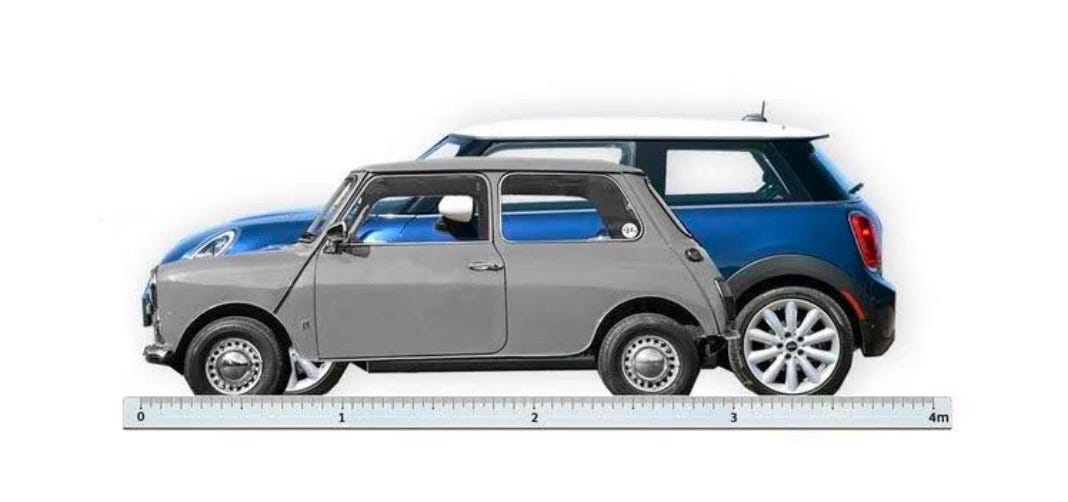
SUV’s pose a particular challenge, then. Their importance, growing popularity and size means action is needed now.
Why SUVs should pay more to park?
SUVs pose several threats to our environment. SUVs are different from smaller cars in ways that matte especially in a borough like Richmond. Additional car parking fees are one way to disincentives ownership or compensate for their use. The main problems:
They take up more space
They wear out roads faster
They’re more dangerous to people walking and cycling
They produce more carbon emissions
They pollute more through tyres and brakes
This particular charge is useful, more generally, as
Disincentive to private car ownership
Strengthening the polluter-pays principle
They take up more space
Most SUVs are too big for Richmond borough’s 1.8m standard parking bays. A record 1,200,000 cars wider than 1.8 metres were sold last year. Many SUVs are now 2m wide.
This affects residents in different ways.
Let’s start with other car owners. SUVs demand to a larger proportion of all the available car parking. Given the growth in the sales, it is expected this problem will become even worse. CleanCities reports,
.. cities expected to lose 8.5-14% of on-street parking by 2040 if the (car spreading) trend continues unchecked.
London and Berlin are each predicted to lose about 100,000 parking spaces.
The pedestrians suffer too. In an area with so many Victorian streets, the SUVs jut into pavements, hampering pedestrians. When the space doesn’t fit the car, it’s the street that loses and in particular the people who walk on them.
The best way to address this challenge is to design Barnes around people first, not cars, a principle key to how Barnes2050 believes the next generation of this area should developed.
They damage roads faster
SUVs can weigh 30% more than a standard car, putting extra pressure on residential roads not designed for them.
The damage done by a vehicle to a road surface is proportional to the fourth power of its axle weight — a principle used to describe the relationship between axle load and damage to the road surface.
Using the formula, a two-tonne SUV does 16 times more damage than a one-tonne car.
Councils foot the bill for repairs; SUV owners should too.
SUVs are more dangerous
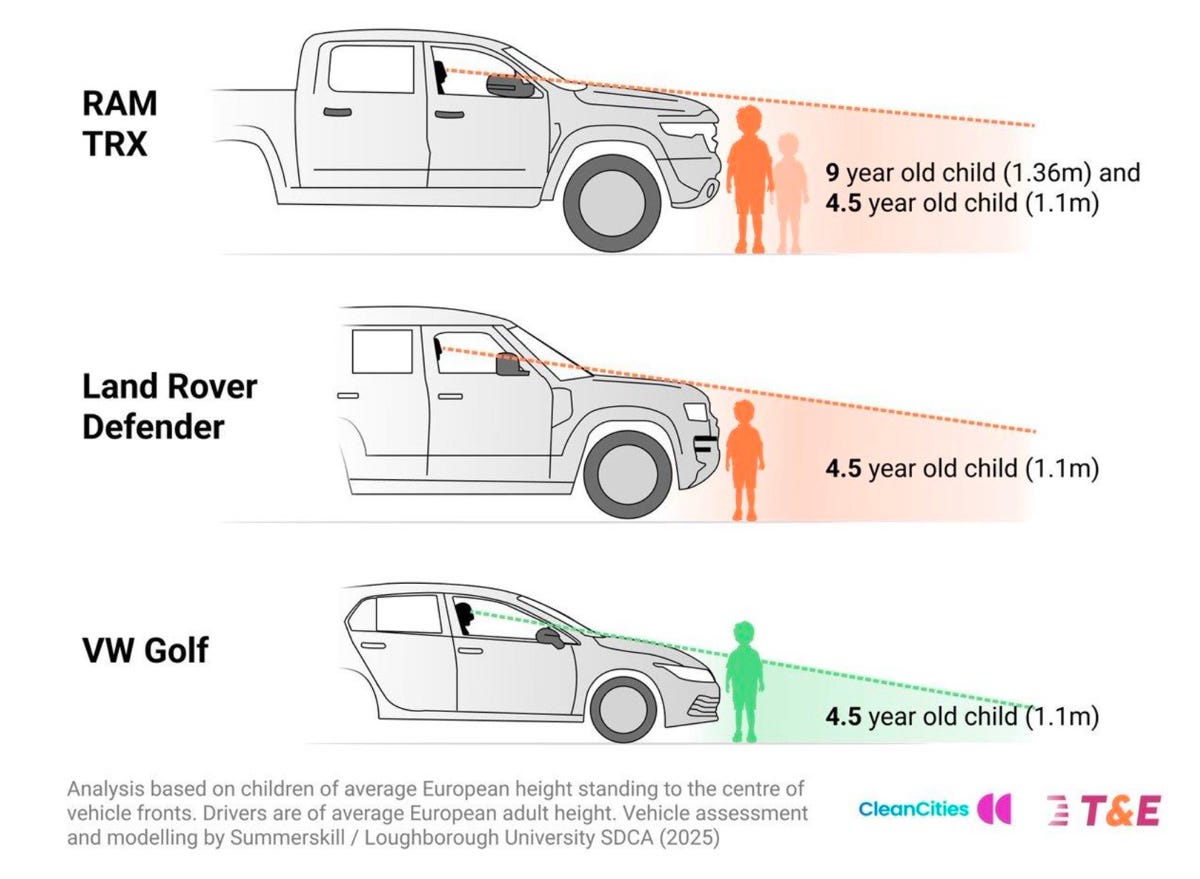
SUVs sit higher, with bulkier front ends and larger blind spots. That makes collisions with pedestrians and cyclists both more likelyand more deadly.
Road safety data backs this up: the bigger the car, the greater the harm. Put another way, a child struck by an SUV is 82% more likely to die than if hit by a smaller car.
SUVs produce more carbon emissions
Even newer models of SUVs emit more CO₂ than mid-sized cars. Richmond Greens said
Petrol and diesel SUVs burn around 20% more fuel than medium cars
Indeed as reported earlier this year by the BBC,
If ranked among countries, the global fleet of SUVs would be the world's fifth largest emitter of CO2, exceeding the emissions of Japan and various other major economies.
SUV shed more toxic particles through tyres and brakes
Weight matters not just for fuel, but for friction. Heavier vehicles wear down tyres and brakes faster, releasing microscopic particles into the air. That kind of invisible pollution worsens asthma and enters our lungs and our children’s.
Disincentives against private cars
Richmond council says it wants fewer private cars and trips. But its policies tell a different story, the ‘car credibility gap’. Today, SUV owners pay no more to park than those with smaller, cleaner vehicles. That’s a missed opportunity. A stiffer car parking charge for SUVs would have a significant impact because they form such a large part of the borough’s private fleet of vehicles.
Price makes a difference. When cities raise parking charges, people drive less or park for shorter periods. In London, one study found that car trips into the centre dropped sharply when the Congestion Charge was introduced and fell even more when parking costs were added to the mix.
National research shows that when councils raise parking prices, demand usually falls. The effect varies by place, but the average change is big enough to matter.
Strengthen polluter pays principle
Richmond borough has the second highest level of consumption in London. We buy a lot of things. That is a function of the borough’s relative wealth. As we adjust our behaviours to reduce emissions - a Richmond council priority - a wider adoption of ‘polluter pays’ is the logical foundation for any disincentives in support of this ambition.
Practical considerations
SUVs are getting bigger with every passing year, creating congestion, taking up limited space on our pavements and streets as well as adding to road danger.
A smarter approach to parking charges isn’t just good policy. It’s a necessary step toward cleaner air, safer streets, and a better public realm.
Let’s put our kerbs to better use.
Barnes2050 has identified contested kerbs as one of the key trends through to 2050. Traditionally the preserve of cars, it is clear there are other often socially more useful uses. Removing some of the SUVs occupying vital space on our streets would make a meaningful contribution to that change.
Richmond pioneered emissions-based parking charges 20 years ago. In the short term the council should revert to that approach. And rejoin the other 20 London boroughs who do this.
Meanwhile, with one eye on a growing EV fleet, the council should investigate ways of shifting to a combination of size and weight. Again they do not need to work alone: they should act in concert with other boroughs starting with Liberal Democrat colleagues in Bath.
This proposal is a work in progress.
It will be reviewed and improved on a regular basis.
It was first published on 05 August, 2025.
It was updated on Thursday 17 September 2026 to include the link to lessons from Bath & North East Somerset Council as well as the relevant parts of the Barnes2050 Manifesto. Several other smaller stylistic changes were made to the presentation to bring into line with the evolving house-style.
You can find all the current proposals listed here.
There’s more about the principle to design Barnes around people first, not cars.
And if you want to know what role parking reform played in reclaiming the streets of Paris, you should try this video report.