

There are many possible futures for Barnes. ‘No change’ is not one of them. The choice is which change.
Some will be better than others. Some ideas will solve one problem while creating another. So if Barnes2050 is going to argue seriously for change, it needs a way of deciding which ideas are worth pursuing.
That is where principles come in.
The Manifesto is the heart of this journal: the place where the ambition is made visible, tested, refined and, when necessary, reworked.
It is made up of several chapters.
Inputs
Trends - signals from the present which might point toward the future
Visions - plausible futures based on values and experiences
Outputs
Principles – small number of guiding ideas that should how we decide
Proposals – specific interventions, big and small to change Barnes
This post introduces the next of these: principles.
They are the criteria we should use when choosing among competing changes between now and 2050.
These are not predictions about Barnes in 2050.
Good proposals will usually satisfy several of them. Most will involve trade-offs. These principles are intended to help make those trade-offs explicit.
There are always downsides. Our active travel Bridge is increasingly popular but it denies some Barnes’ residents the ability to move easily.
Because these are meant to practical, they will be limited in number.
Like the rest of Barnes2050, they are subject to change. Launch, learn iterate is the engine for this process. If you have any comments about this approach or the specifics below, please do get in touch.
Welcome to Barnes2050, a place-based futures project asking: how do we make sure Barnes - the place and its people - is thriving and climate-ready by 2050? If this is your first visit, you might want to start here.
Barnes2050 Principles
This week sees the launch of the first Barnes2050 principles.
Today - design Barnes for people first, not cars.
Over the next few days, I’ll introduce four more:
Get buses and vans moving
Embrace the e-bike generation
Test new thinking with purpose, regularly
Use major renewal to build for the climate we are going to have
Together they will become the framework Barnes2050 uses to judge future proposals.
They are not the only principles that matter. They are simply the ones that have emerged most clearly from the work so far.
These will be brief descriptions. Deeper, fuller consideration will follow.
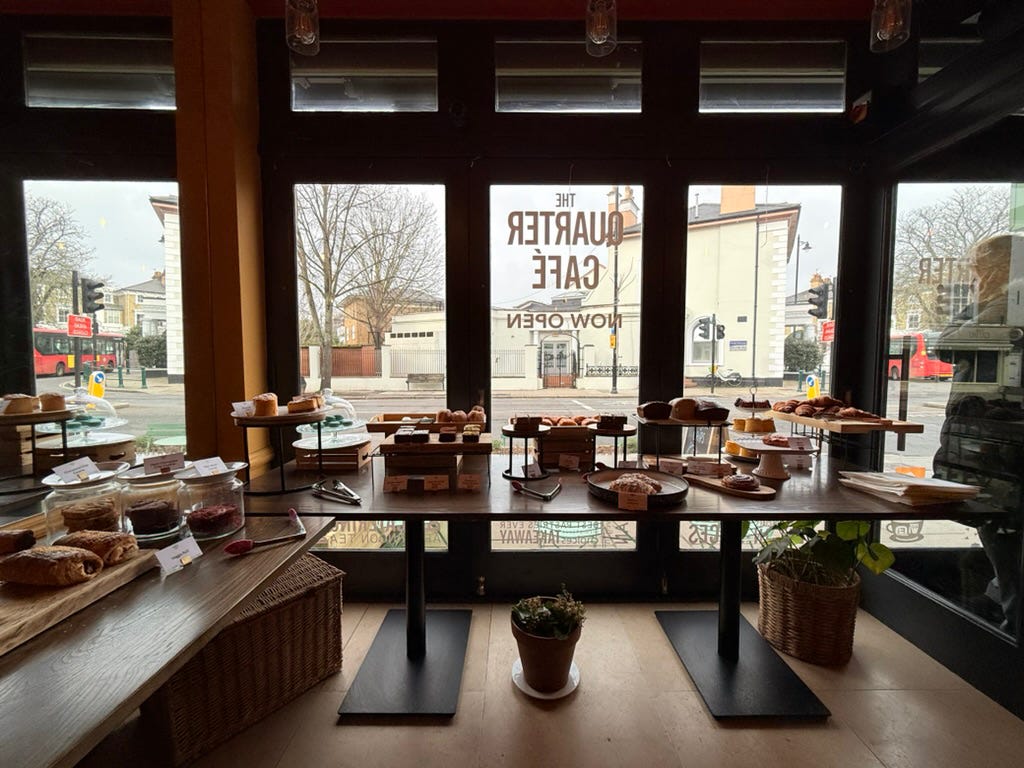
Design Barnes for people first, not cars
This lies at the heart of Barnes2050 thinking.
What kind of place are we trying to create?
For much of the last century, Barnes—like most places in Britain—has been shaped around the movement and storage of private cars.
Barnes2050 starts from a different assumption: public space should first serve the people who live, meet, walk, shop, play and spend time here.
That does not mean every road should become pedestrianised, or that vehicles no longer matter. Often they will continue to dominate. But they should not dominate by default.
Walk - literally - for twenty minutes in any direction on the peninsula and the opportunities become obvious.
At every junction, crossing and stretch of pavement, ask the same question: could we make life easier, better for people walking, meeting, shopping, waiting, cycling, catching a bus, pushing a buggy, using a wheelchair or simply spending time outdoors?
The rewards are wider than transport: healthier lives, stronger local businesses, extend far beyond public transport, lower emissions and a more sociable Barnes.
Continue exploring: Designing Barnes for people first, not cars
Barnes should be shaped around people living, working, playing and belonging, not chiefly around the movement and storage of cars.
More stories about designing Barnes for people first, not cars
Notes & thoughts
Trends and visions help Barnes2050 understand possible futures; principles help it choose between them; proposals are what follows from those choices.
This the first of five principles published this week. Each will be explored in more detail over the coming days. Next, Get buses and vans moving.
Together these principles will become the framework Barnes2050 uses to judge future proposals. If a proposal doesn’t support one or more of these principles, the chances are it isn’t a proposal worth pursuing.
Over to you.
If these are the rules by which Barnes2050 intends to judge change, are they the right rules?
Let me know what you think.
Until then, next in the series, how do we get our buses and vans moving, again?