

I love Manchester. I have a thing for this sort of city. Glasgow. Belfast. Melbourne, where I’ve lived. Vancouver. Mumbai. Empire cities whose modern identities were forged, in different ways, by industry, migration and empire.
Growing up, my relationship with Manchester was defined by sport, especially cricket. My first visit to a Test Match was to see the West Indies at Old Trafford.
Fast forward thirty years and I managed an R&D team in Salford, Greater Manchester. I am proud of the small role I played in making MediaCity UK a successful regeneration project.
And there’s that word.
Regeneration.
Welcome to Barnes2050, a place-based futures project asking: how do we help Barnes - the place and its people - thrive and be climate-ready by 2050? If this is your first visit, you might want to start here.
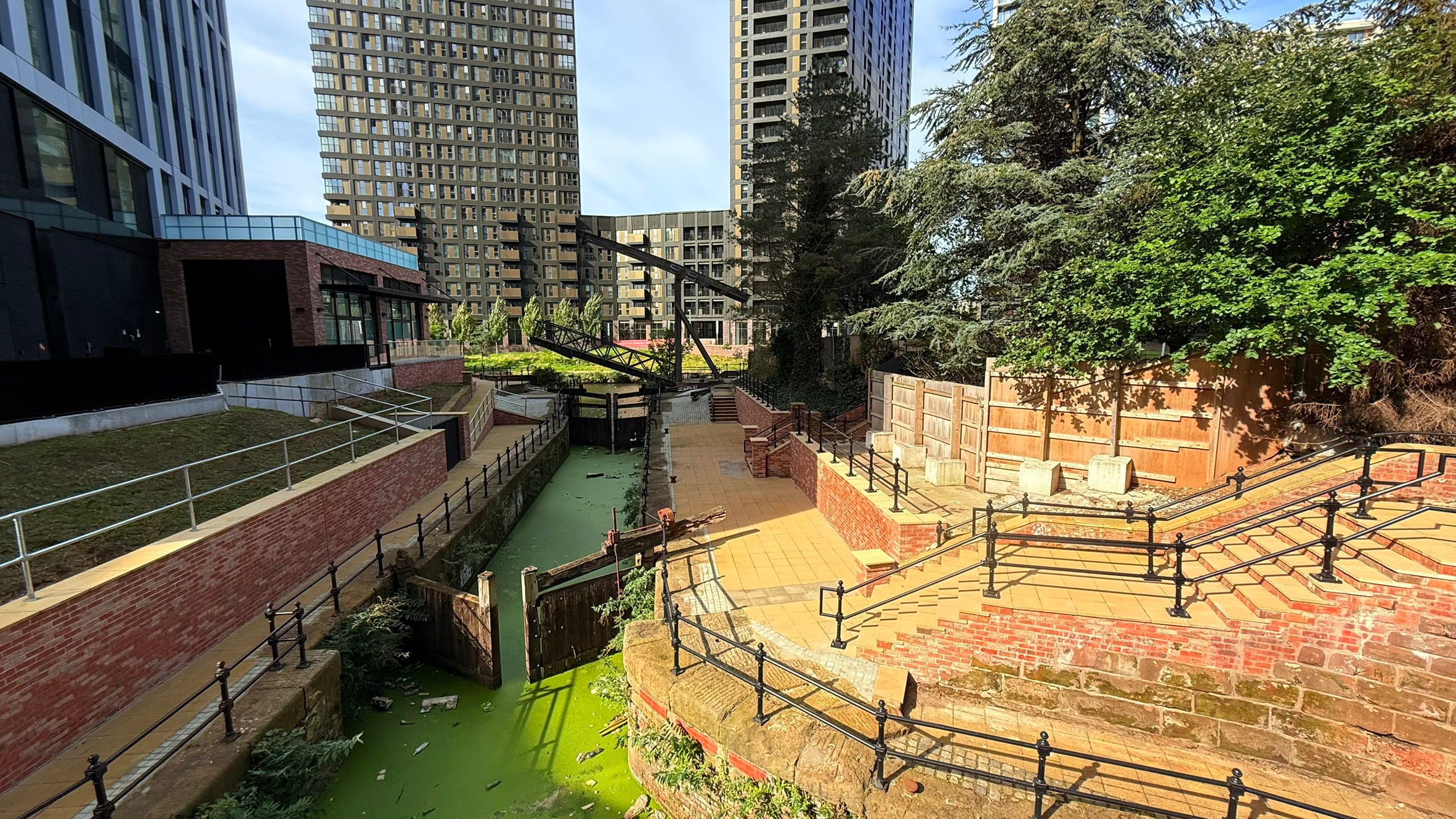
I heard it a lot during two days spent at Making Active Places in Manchester.
This was Active Travel England’s first annual get-together: sharing knowledge and best practice across transport and placemaking. Trains, trams, walking, buses, wheeling and bikes. Heidi Alexander MP, Secretary of State for Transport, Chris Boardman CBE, Steve Coogan, Dame Sarah Storey and hundreds of delegates.
Throughout the two days, two words kept cropping up.
Regeneration and Burnham.
I get it.
‘Mayor Andy’ was named-checked by all those who represented any aspect of Greater Manchester. As they should. Manchester is vibrant. There’s renewal everywhere you look. The conference itself was held on the site of the former Granada Studios complex that gave us World In Action, Coronation Street and Stars in their Eyes. (Showing my age?)
The scale of change across the city is is eye-popping. Just one of the projects featured will deliver 15,000 homes over the next 20 years.
This roll call of regeneration projects got me thinking.
What do you call change in a place like Barnes SW13, that doesn’t need regenerating?
Barnes is not going to be regenerated.
Renewed? Perhaps. But that feels corporate-bland.
Evolution? Closer, but still uninspiring. You can’t imagine it on a t-shirt.
Maybe I was looking for the wrong sort of word. Instead of trying to name the eventual consequences of change, perhaps I needed to describe how we should approach it.
Let’s workshop this
The conference offered an irresistible opportunity to try out some language.
This was not research, it was elemental. I generated a long list of phrases and dropped different ones into conversations over the two days. Sometimes I shared photographs from my iPhone. Barnes Pond, The Terrace, e-bikes crossing Hammersmith Bridge, Castelnau and the High Street.
I started with something I’ve used on this journal before,
Barnes is brilliant but not finished.
That landed well, as did others,
A better Barnes, still Barnes.
Same Barnes. New possibilities.
Barnes changes. Barnes remains.
These four were the best received out of the twenty. But two other phrases produced something more interesting than comprehension and approval. They provoked conversations.
Barnes wasn’t always like this
The first of these phrases only really made sense to two people at the conference. Both were from London. Both understood immediately the issue I was getting at.
Talk about changing Barnes and sooner or later someone will say,
But it’s lovely already. Why change it?
It is a fair challenge. My go-to answer has become,
Barnes wasn’t always like this.
It sounds like a warning. I mean it as reassurance. The phrase was prompted by online promotion for an upcoming talk at Fish. The speaker wanted to talk about stewardship. The point was simple: the Barnes we value today is itself the product of human intervention, some of it dating back centuries.
People built houses. Laid out roads. Dug and shaped landscapes. Built a railway. Put up a bridge. Created shops, schools and public spaces. And later generations changed them again.
Fortunately for us, more often than not, they got enough right to leave us a place worth caring about.
Barnes did not arrive finished.
Nor is preserving everything exactly as it is necessarily the same thing as stewardship. Change is not the opposite of stewardship. Part of stewardship is deciding what should change and what should not.
Same Barnes. Different futures.
The second phrase was less about Barnes and more about how Barnes2050 might help,
Same Barnes. Different futures.
Barnes2050 wants to change how we talk about the next two decades. Not by offering a single grand vision of Barnes in 2050. Certainly not by pretending to know exactly what will happen.
Instead, I want to make different plausible futures easier to imagine and the choices between them harder to ignore.
Hammersmith Bridge alone could return Barnes to an old pattern of movement or become the starting point for a different one. Similar choices await us over housing, the Thames, public space and an ageing population.
None comes with only one possible answer.
Same Barnes means strengthening what makes Barnes distinctive without tipping into nostalgia.
That distinctiveness is not a constraint on change. It is the platform for it: the confidence to try different futures, and to choose a different path when the old one no longer works.
Manchester spent two days talking about regeneration. Barnes does not need an equivalent word. It needs is a better way of talking about change.
Same Barnes. Different futures.
Merch, anyone?
Does Barnes need a different sort of bus?

There’s a row brewing over the pending changes to the buses in Barnes. Transport for London (TfL) had a plan for changing the routes, they put it out to consultation. The latest Barnes bus plan goes live in August, 2026.