

Imagine a child born in Barnes SW13 on 11 November 1918. The original Armistice Day. Now imagine that child’s twenty-fifth birthday. It’s November 1943. Britain has been at war for four years.
Ask what life might look like in twenty-five years and the answers tend towards two extremes. Much the same, with a few adjustments. Or scarcely recognisable.
For a futures project like Barnes2050, history offers a way to test those instincts. Take the twenty-five years between those two birthdays. Which changes would have seemed plausible to the parents in 1918? Which would have sounded absurd? And what remained stubbornly familiar?
Then return to your own sense of 2050 and ask whether it is too timid, too extravagant, or simply looking in the wrong places.
Here are eight things that happened in and around Barnes between the day our Armistice Baby was born and the week they turned twenty-five.
Welcome to Barnes2050, a place-based futures project asking: how do we help Barnes - the place and its people - thrive and be climate-ready by 2050? If this is your first visit, you might want to start here.
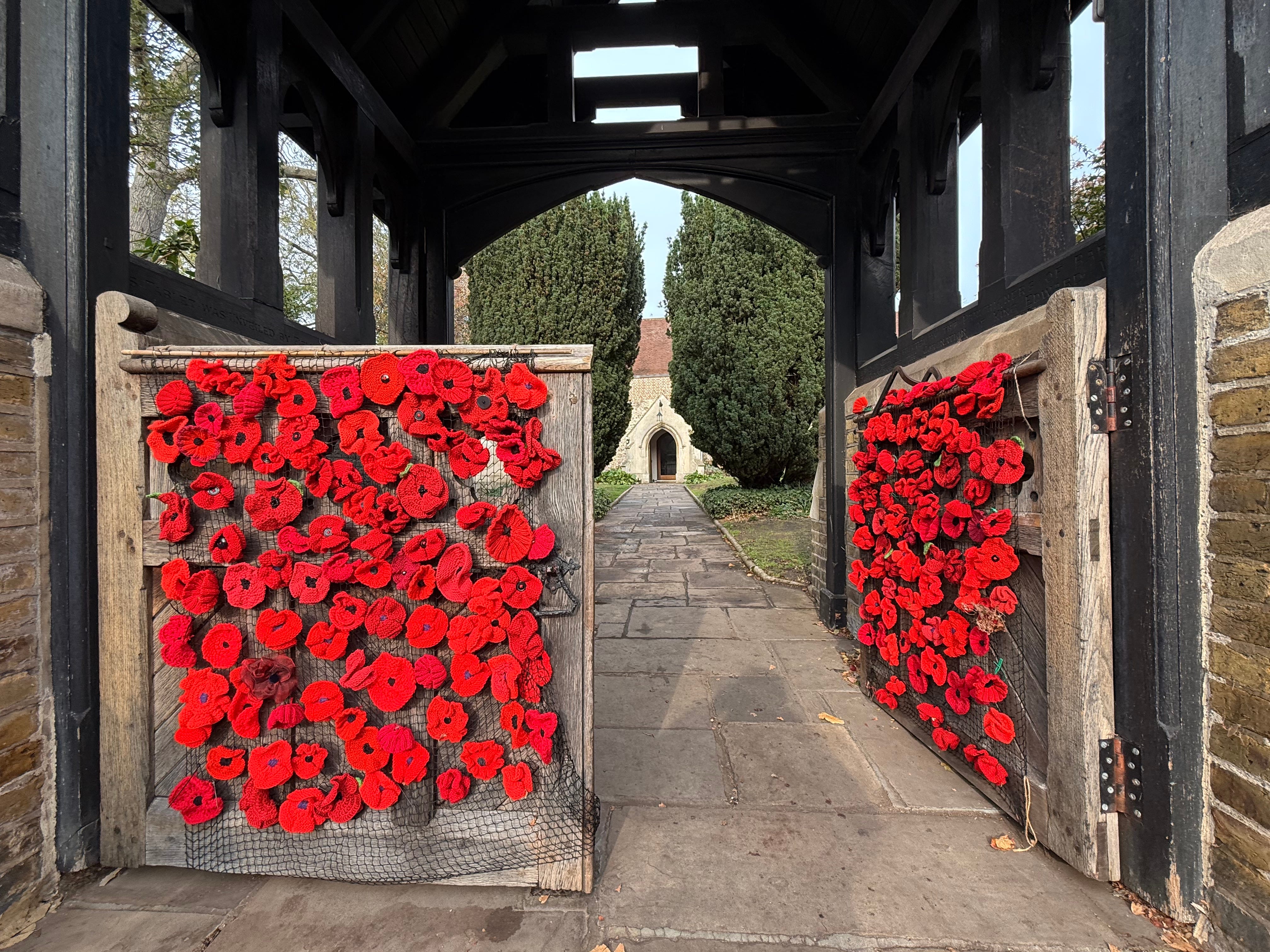
St Mary’s war memorial unveiled, 1921
On 19 June 1921, Field Marshal Sir John French unveiled the stone cross in St Mary’s churchyard. Historic England describes it as
.. part of the biggest single wave of public commemoration ever with tens of thousands of memorials erected across England, both as a result of the huge impact the loss of three quarters of a million British lives had on communities and the official policy of not repatriating the dead, which meant that the memorials provided the main focus of the grief felt at this great loss.
A picture postcard captures the moment. Our Armistice Baby might have been there. Two years old, small enough to need lifting up to see. The names were inscribed inside the church. The local history society’s tally records 353 men and one woman from Barnes who died in the war.
Lowther Estate developing, starting 1920s
Before the First World War, north Barnes still had room for market gardens, nurseries and a cricket ground on Lowther Road. When the cricket club took on the ground in 1919, its members wheeled the old pavilion over from Mortlake on a barrow.
The local history society’s timeline records development on the Lowther Estate in 1921, when our Armistice Baby was two. Four years later, The Architects’ Journal reported that the London County Council planned to build working-class housing on the estate.
A theatre on Church Road, 1925
At six, our Armistice Baby was probably too young for Tess of the D’Urbervilles. But the parents could have seen it on Church Road. Byfeld Hall, the building we know today as the Olympic, had become the Barnes Theatre. Tess opened there in September. By November it had moved to the Garrick in the West End.
Castelnau Estate, 1926–28
After the First World War, the London County Council looked for land on the edges of London to ease overcrowding. In Barnes, it built a cottage estate of about fifty acres on former market gardens west of Castelnau.
Work began in 1926. By December 1928, the last of some 2,500 residents had moved in. A school opened on Stillingfleet Road around the same time. For our ten-year-old Armistice Baby, that was the scale of the change. Whole streets of new neighbours, some of them your age.
Barnes becomes a municipal borough, 1932
This was another one for the parents. Local government reform. Although our Armistice Baby might have come out for the parade. There’s newsreel footage of the crowds and of Lord Ashcombe handing over the charter granted by George V.
Barnes, Mortlake and East Sheen now formed the Borough of Barnes, with a mayor of its own. The council still met at The Limes on Mortlake High Street, where local government had been based since 1895. The old council house had a new borough to run.
Chiswick Bridge and the Great Chertsey Road, 1933
Our Armistice Baby was fourteen by now. Old enough to catch that most Barnes of ailments, bridge fever. On 3 July 1933, the Prince of Wales opened Chiswick Bridge. He opened Twickenham and Hampton Court bridges on the same day.
The new crossing was just west of Barnes, linking Mortlake to Chiswick. It carried the Great Chertsey Road, now the A316, across the Thames. One of the aims of the scheme was to take traffic off Hammersmith Bridge. (I know, I know.)
The bombing of Barnes, beginning in 1940
At 2.47 in the morning on 25 August 1940, the first high-explosive bomb recorded in Barnes fell on Stanton Road. It killed Harold and Elizabeth Aldridge, flattened five houses and damaged another twenty-five. A month later, on 25 September, a land mine destroyed homes in Willow Avenue and Brookwood Avenue.
Our Armistice Baby was twenty-one. He or she could be on active duty. A son, if he was single, had been liable for compulsory military training at twenty, before Britain declared war. From December 1941, an unmarried daughter of the same age could be called up too.
World War II turns a corner, 1943
By our Armistice Baby’s twenty-fifth birthday, there was some reason for hope. The Germans had surrendered at Stalingrad in February and lost the initiative on the Eastern Front after Kursk that summer. The Allies had landed in Sicily in July and on the Italian mainland in September. Italy had surrendered. The fighting there went on.
In Barnes, there was a smaller change. Four days after our Armistice Baby turned twenty-five, the cinema on Church Road reopened as the Plaza. If they were home that Monday, they could have gone to see Betty Grable in Coney Island.
More worrying, if their father had served in the first war and was still under fifty-one, he too could be called up. A family that had welcomed a child on the day the fighting stopped could now find two generations liable to serve.
Notes and thoughts
Eight events - a select few, admittedly - to make a two points. New houses, new friends, new ways of getting about.
Then a ghastly twist.
A child born on Armistice Day could be called up to serve in another war. All in twenty-five years, the same stretch of time as 2025 to 2050, the focus for this project.
Someone decided to build houses where there had been market gardens. Someone decided where the new bridge should go. Those decisions still shape where we live and how we get about. For our Armistice Baby, other changes came to the front door. A young man could open his call-up papers and find that the next few years of his life had been decided for him.
Between now and 2050, some changes will arrive at our front doors too. Others will come down to decisions we can still influence. Where will we make room for more homes? How will we get about? What will it take to keep our streets liveable in hotter summers? Which of those decisions will someone turning 25 in Barnes in 2050 wish we’d made now?
Manifesto Principle 5: Use local renewal to build for the climate we are going to have

This is one of the Barnes2050 Principles: ideas intended to help make choices about how Barnes SW13 develops between now and 2050.