

London Rivers Week runs from Saturday 23 to Sunday 31 May and Richmond council has used it to nudge residents towards a useful, mildly sobering exercise: checking the long-term flood risk where they live.
Welcome to Barnes2050, a place-based futures project asking: how do we make sure Barnes - the place and its people - is thriving and climate-ready by 2050?
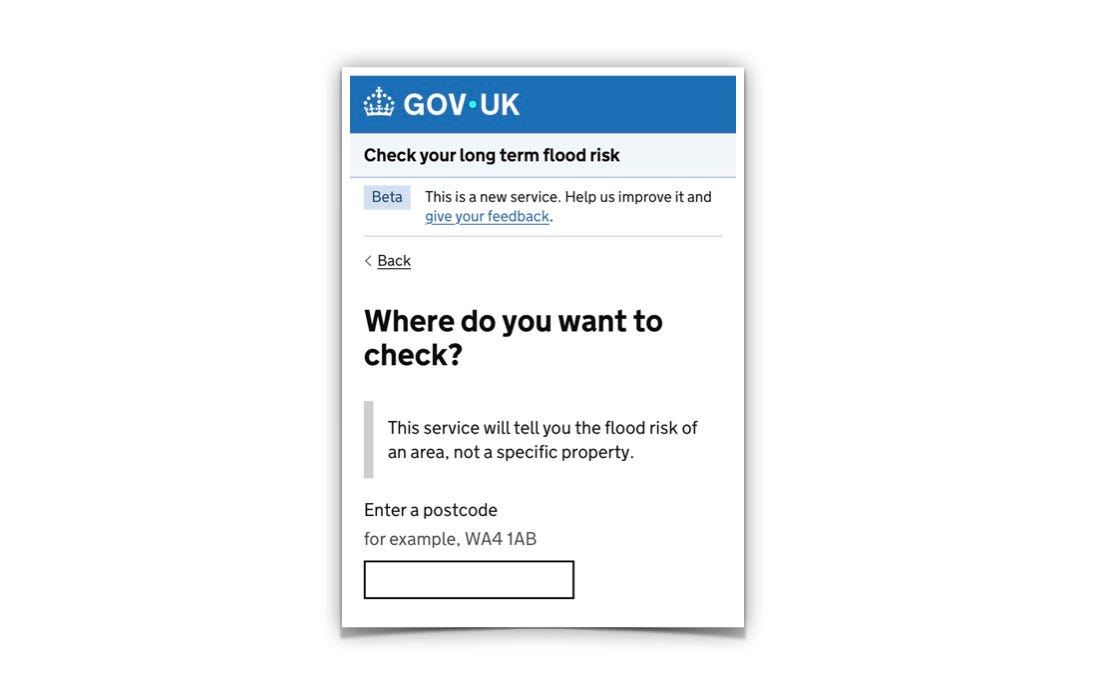
The council linked to the UK Government’s long-term flood risk service. You enter your postcode, select your address, and the site gives you an assessment for the area around your home.
The result for my home - or more precisely, the area around my home - was reassuring.
Good,
Although not quite good enough.
Notes & thoughts
The main flood threat to my home is not from river or tidal flooding.
It is duller than that.
It is the patio.
The front garden is now porous. In ordinary heavy rain, it does what a garden should do: it absorbs water rather than sending it elsewhere.
The back garden is different. It is wall-to-wall patio. Not good when rain falls hard, fast and with nowhere useful to go.
This is one of the awkward truths of climate adaptation. The big risks are often described at the scale of rivers, boroughs and national infrastructure. But some of the most practical answers sit at the scale of a paving slab.
In London, flood risk is not only about water coming from somewhere dramatic. It is also about water being refused everywhere ordinary.
By the road.
By the drive.
By the patio.
By the garden that has slowly ceased to behave like a garden.
Note to self - that needs to change soon.
Barnes2050 has argued before that we need to be as concerned about heat as water. In part, that is because high temperatures pose a particular threat to older people, especially those over 65.
But water still matters. Especially the water we barely notice until it is in the wrong place.
So, yes: go and check the long-term flood risk to your home.
And then look, less romantically, at your paving.
'This is the story of the most astonishing and destructive thing never to happen to London'

London very nearly remade itself around the car. Not in the casual, incremental way we know today, but through a vast, engineered web of elevated motorways slicing across neighbourhoods from Barnes to Bow. It sounds outlandish. It was very nearly real.