

Ten minutes by bike from Barnes stands one of the world’s great botanical gardens. This week, one of its most striking exhibits isn’t alive.
And that is deliberate.
Welcome to Barnes2050, a place-based futures project asking: how do we make sure Barnes - the place and its people - is thriving and climate-ready by 2050?
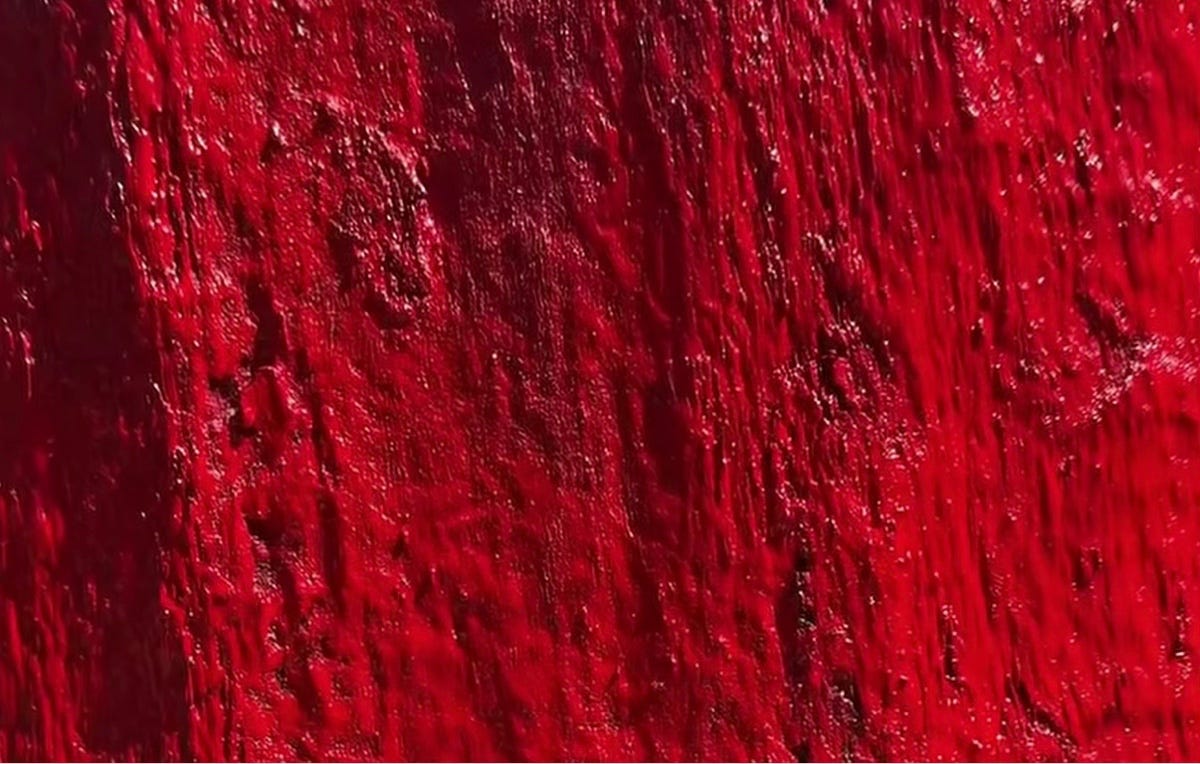
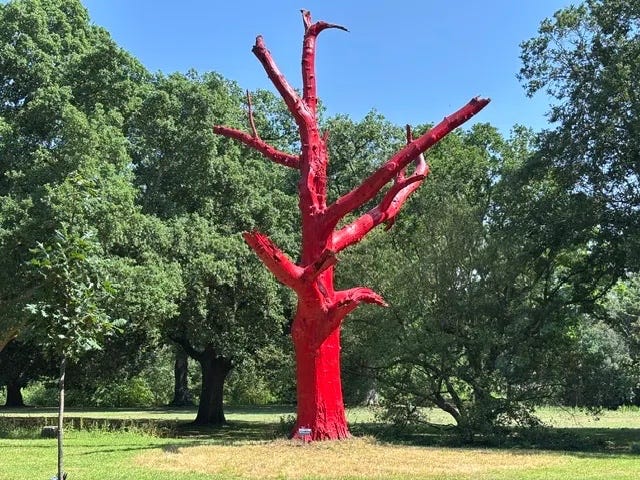
It is a dead oak tree, painted bright red.
The tree died during the extreme heat and drought of 2022, when temperatures in the UK exceeded 40°C for the first time in recorded history. It was one of around 400 trees lost by Kew Gardens that summer.
Most of those trees have long since been felled.
This one has been left standing.
A skeleton.
Deliberately.
Kew wants visitors to stop, look and ask why.
Richard Deverell, Director of the Royal Botanic Gardens, Kew, explained the thinking,
This is going to be a stark, big, dead tree.
And we’re going to be very clear in the messaging: this was killed by climate change.
Climate change is here and now and it is killing oak trees, the iconic tree of Britain. And we need to get that message across.
I mean, that’s quite controversial within Kew because a botanic garden should be full of beautiful living things.
It is a direct statement from one of Britain’s best-loved institutions. As Deverell acknowledges, some within Kew questioned whether a botanic garden should display death as well as beauty.
But that is precisely the point.
The tree has become both an exhibit and a warning.
Kew’s staff have reinforced that message throughout London Climate Action Week, describing the painted oak as a reminder that climate change is no longer a future threat but a present reality.
That same message was echoed earlier this week by António Guterres, the United Nations Secretary-General, during his visit to Kew,
If climate change can kill a tree in England, in Kew Gardens, one can imagine the dramatic impact against nature and against us all all over the world, with the acceleration of climate change we are all witnessing.
The solutions exist. What we need now is speed, ambition and delivery.
Notes and thoughts
Kew Gardens is playing a full role across London.
Its Tree Collections and Arboriculture team has been working with the Greater London Authority to assess 1.2 million trees across the capital. Their findings are sobering:
The team found that 62% have low suitability and 10% are vulnerable. Meaning that by the end of the century 72% of London’s urban canopy could be at risk.
Barnes is fortunate. We are an unusually blue and green part of an unusually blue and green borough.
But being greener than most is not the same as being ready for what lies ahead.
Given the time trees take to mature, and what we already know about our climate by 2050, we need to plant for the future now.
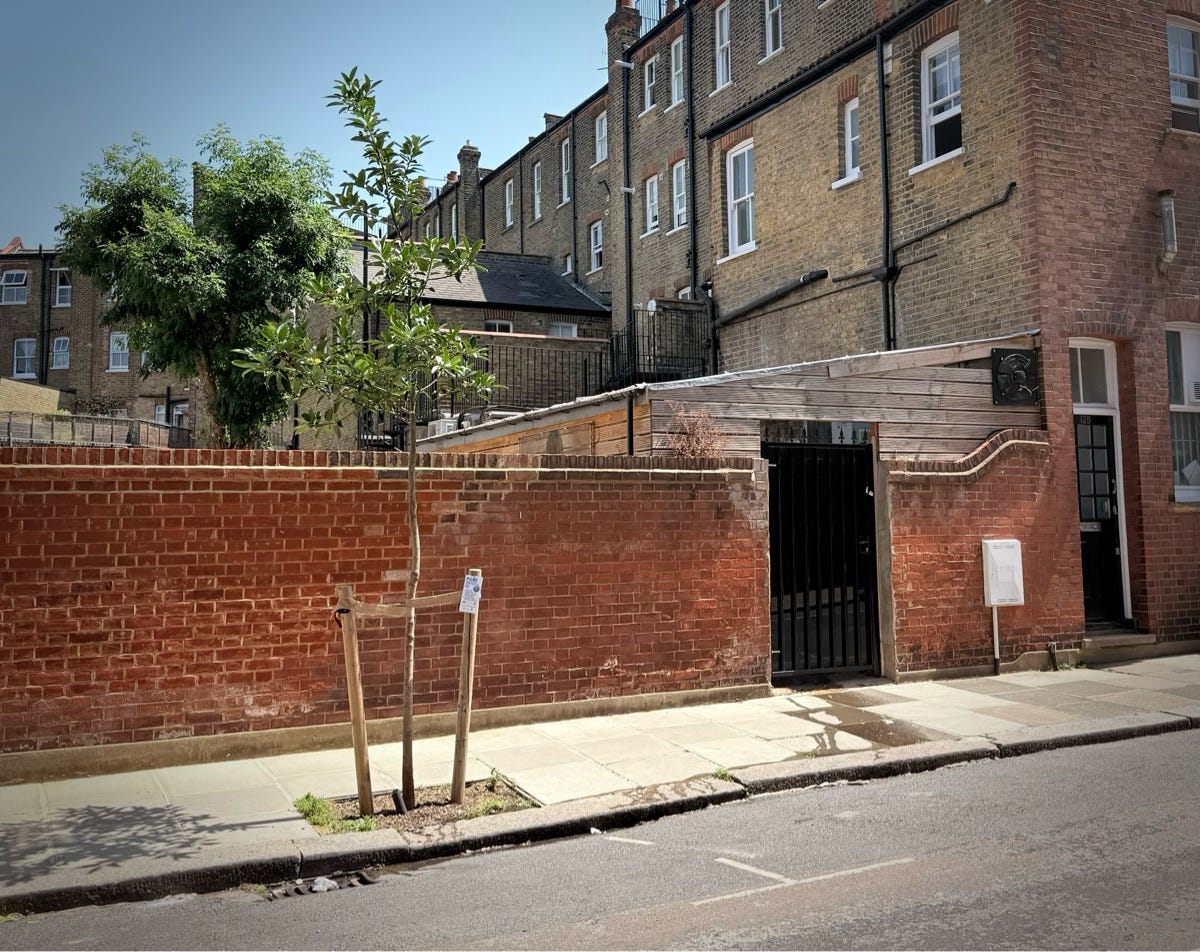
Routine tree planting by Richmond council continues across Barnes. This young sapling in Byfield Gardens, close to Olympic Studios, is part of that work.
Richard Deverell, Director of Kew, puts it,
Trees are vital for all life on earth, including humanity. They provide a home for a huge diversity of animals, plants and fungi.
They are a source of food, rainfall, materials, cooling and great beauty.
For Barnes2050, the opportunity is to turn that principle into a vision for a hotter and wetter Barnes.
That means more trees where they make the biggest difference.
First, we need more shade on the routes people use every day. Key pedestrian corridors, such as the High Street, should have a much richer tree canopy so that walking remains comfortable and attractive during hotter summers.
Second, every street in Barnes should hold more water than it does today. That is the thinking behind the Community BlueScapes project. Rain gardens, restored reed beds and rewilded stretches of the Beverley Brook are all designed to slow water before it reaches the Thames. Trees have an important role to play in that system too.
These are not separate ideas. One helps us live with more heat. The other helps us live with more intense rainfall. Together, they point towards a neighbourhood designed for the climate we know is coming.
Barnes2050 return to both of these proposals in future.
The skeletal red oak at Kew is a reminder of what we have already lost.
The young tree in Byfield Gardens is a reminder of what we can still build.
The choice between them is ours.
Follow Barnes2050’s ongoing coverage of how heat is shaping Barnes today and tomorrow.