

The summer of 1976 is seared into the nation’s collective memory, as this BBC documentary reminds us. For good reason. The Met Office say that summer
.. remains one of the most significant weather events in UK history.
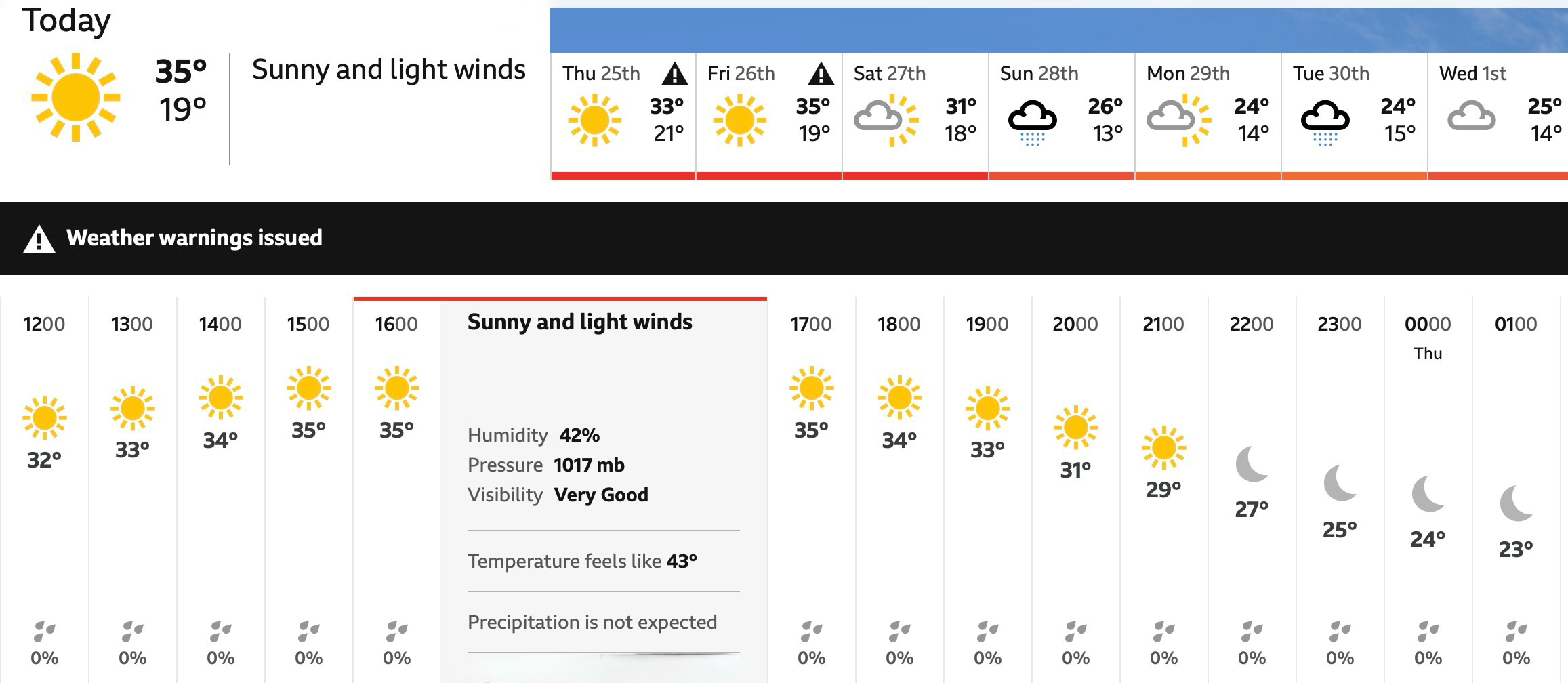
To mark the fiftieth anniversary, the Met Office has developed a scientifically plausible scenario based on around 2.5ºC of global warming.
It explores how a prolonged heatwave similar to 1976 could unfold in the coming decades.
Welcome to Barnes2050, a place-based futures project asking: how do we make sure Barnes - the place and its people - is thriving and climate-ready by 2050?
Changing climate
As the BBC report,
In the UK, warming has been happening at the rate of approximately 0.25ºC per decade since 1976, according to the Met Office.
Professor Stephen Belcher CBE, Met Office’s Chief Scientist said,
Since [1976], our climate has fundamentally changed, with average UK summers having warmed by around 1.4°C. Crucially extremes have changed too.
The evidence is - literally - all around us.
You can see the long-term effect of these changes most clearly in these Climate Stripes.
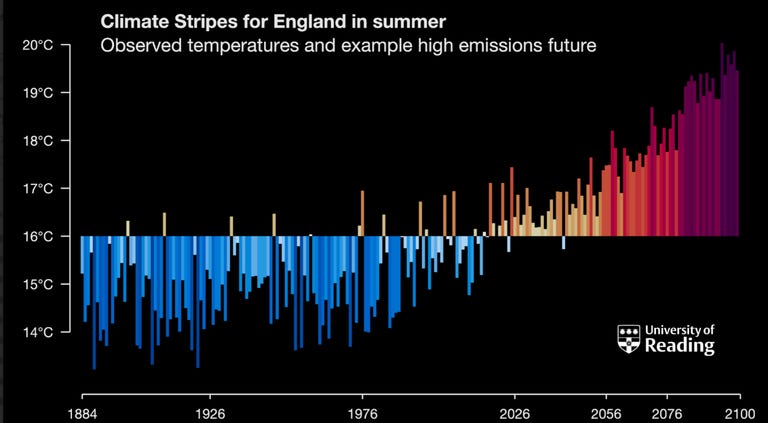
Ed Hawkins, Professor of Climate Science at the University of Reading said,
.. heatwaves will become more common in the years ahead and what felt like a freak event to grandparents in 1976 will become a new normal for their grandchildren.
In the Met Office scenario, Professor Belcher says the UK could experience
.. nine consecutive days which reach over 40ºC somewhere in the UK.
It is one reason the National Fire Chiefs Council warns that fire conditions once considered rare could persist for weeks, even months.
Notes and thoughts
It is not difficult to connect this national picture with living on the Barnes peninsula.
The Met Office has also provided Richmond council with a detailed climate assessment for the borough. Alternatively consider Hammersmith Bridge. Hammersmith & Fulham council published a guide for residents called, What is the climate and ecological emergency? This explained,
During the heatwave in 2020, Hammersmith Bridge was closed to all traffic after the bridge fractures were aggravated by extreme heat.
Barnes2050 has been heat aware for some time. A heat-related incident was the trigger for this project. You can read more about the effects of heat, current and future, here.
Heat is an insidious killer. Water is an extravagant destroyer, announcing itself dramatically; heat does not. It hides in plain sight, quietly shortening lives, particularly among older and more vulnerable people.
How to respond
If you want to understand what comes next, start with the latest report from the UK government’s independent climate advisers, the Climate Change Committee. If the full report feels daunting, begin with the shorter Barnes2050 summary instead.
The message is straightforward. Action is needed from governments, businesses and individuals, in that order of responsibility. But individuals still have an important part to play.
There are three places where most of us can make a meaningful difference.
Your home
In Richmond, the biggest source of greenhouse gas emissions is not transport but our homes.
In 2024, domestic buildings were responsible for 45.5% of the borough’s carbon emissions, making housing the single largest source of local greenhouse gas emissions.
Whether you own your home or rent it, Richmond council offers advice and support to help improve its energy efficiency.
Your car
Around three-quarters of households have access to a car or van in Richmond borough. If yours runs on petrol or diesel, reducing how often you use it remains one of the simplest ways to cut emissions

Your support
Finally support the major projects already under way to make Barnes more climate ready.
Community BlueScapes is the crown-jewel in the area’s climate-readiness preparations. Meanwhile, plans are afoot for Barnes’ first purpose-built climate-resilient public building at Vine Road Recreation Ground.
The Barnes of 2056 will almost certainly be hotter than the Barnes of today. Whether it is also healthier, greener and easier to live in is not just a question of climate. It is a question of choices.
Barnes2050 maintains a strict discipline on reporting weather forecasts and climate projections. Predictions are everywhere. New reports appear almost daily.
This journal anchors its climate coverage in the work of Met Office. Considered analysis is shared a limited number of trusted journalist sources including the Financial Times, BBC, Guardian and New York Times. Prominence is also given to a select group of scientists including Simon Clarke and Bill McKibben.
Read more analysis about the effect of heat on Barnes.