

This is the third of the Barnes2050 Principles: ideas intended to help make choices about how Barnes SW13 develops between now and 2050.
Barnes will change. The question is not whether change happens, but what criteria we use when choosing among competing changes. So far, the principles have asked who is Barnes’ public space actually for and pointed out that not all traffic is equally useful.
As the Barnes2050 Manifesto develops you’ll see how these principles inform the proposals for helping Barnes - place and people - thrive and be climate-ready by 2050.
The next principle would have been unimaginable at the turn of this century.
Welcome to Barnes2050, a place-based futures project asking: how do we make sure Barnes - the place and its people - is thriving and climate-ready by 2050? If this is your first visit, you might want to start here.
Principle 3: Embrace the e-bike generation
Tell a Barnes resident 25 years ago that one day, he or she would see hundreds of e-bikes in Barnes every day. Pelotons regularly cruising along Church Road heading to and returning from work. Clusters of first light, then dark, hire bikes parked on spare pavement corners. Friday crowds heading on two wheels over Hammersmith Bridge to the riverside pubs.
Well, you would have been laughed at. The word ‘lycra’ would have featured prominently
And it’s not just Barnes. Some 1.5 million hire e-bike journeys were made in Richmond in 2025.
The rise of the e-bike is remarkable. ‘Boris bikes’ started in July 2010, Lime bikes in 2018 although they didn’t reach Richmond until 2021
E-bikes have a particular appeal to younger adults , including Gen Z. Born between 1997 and 2012 , they are amongst the biggest renters. A Department for Transport Survey found 16% of the 13-24 age group used them.
You might call them the e-bike generation.
This makes sense.
Younger people may use e-bikes because they’re cheap, convenient, fun, fast in London, don’t require parking, work well with public transport; or because they don’t own cars. Probably some mixture.
For the rest of us there’s a bigger prize. This is the chance to shift the thinking of a generation away from ‘cars as default’.
If we could do that, fewer vehicles might follow. After all, every person who opts for an e-bike rather than a car leaves a little more room on the road for essential vehicles.
This might be happening. The e-bike demographic extends beyond Gen Z. Lime says its average London rider in 2024 was 34. These Millennials were among the first to enjoy the thrill of zooming into town on a bike. They have stuck with it.
Barnes2050 believes there will be another e-bike generation by 2050. Again, you can see this trend emerging in the data. Boomers (cough) are renting and buying e-bikes. It’s not just the health benefits: they are ‘a miracle pill for older adults’. The pedal assist is welcome even on the gentlest slopes, such as those you find in Barnes.
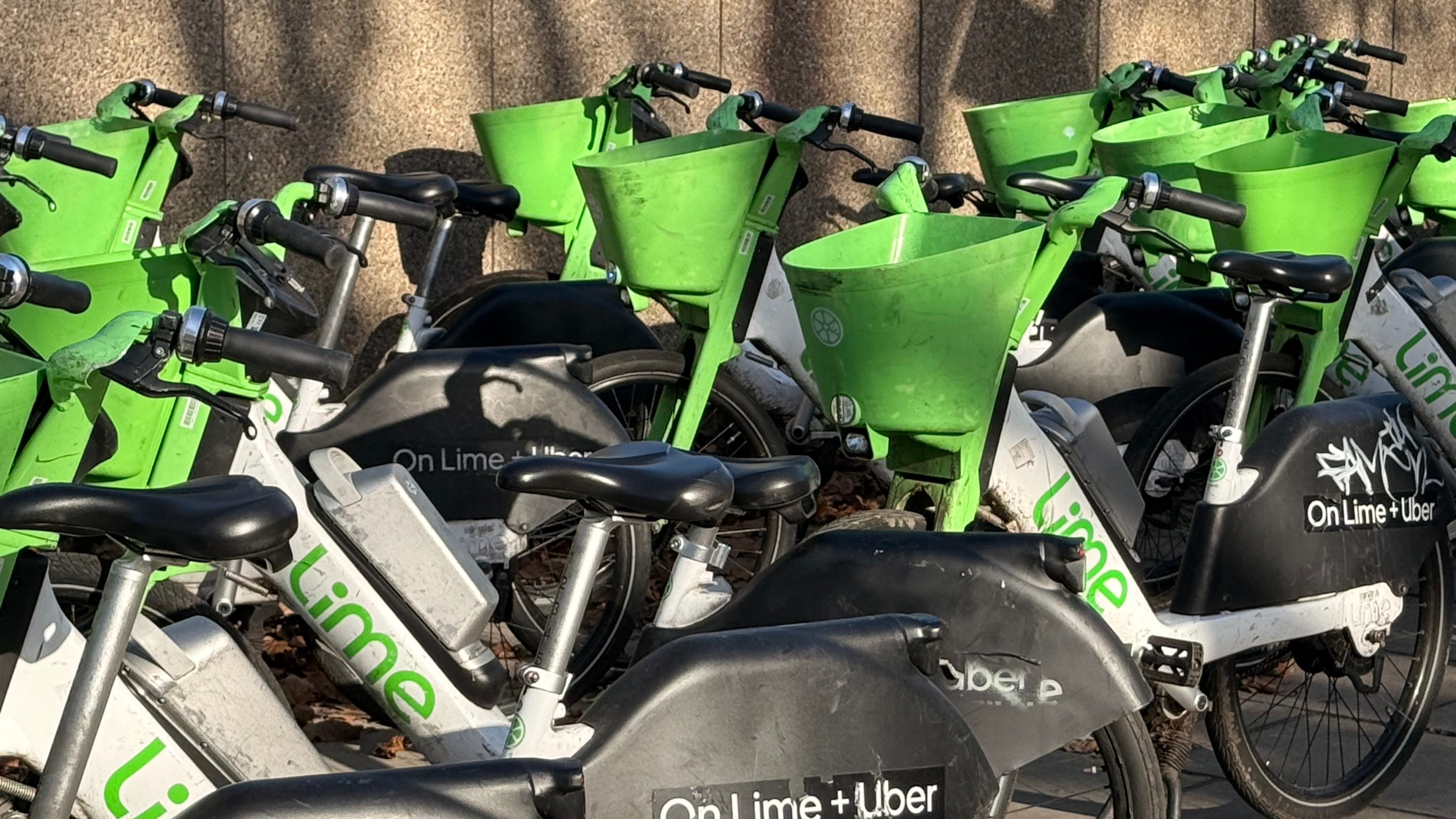
This increasingly important form of transportation could change the nature of Barnes. And in doing so it might influence the make-up of the population.
Barnes has an ageing population. That makes it even more important to pay attention to how younger generations are already choosing to travel.
Good planning should look forward. We should design, at least in part, around the habits of the people who will inhabit that future, not just those whose habits formed decades ago.
If we want younger people to build their lives in Barnes, our streets should increasingly reflect the ways they already move: walking, cycling, e-bikes and public transport. The transport system could help create tomorrow’s population and community.
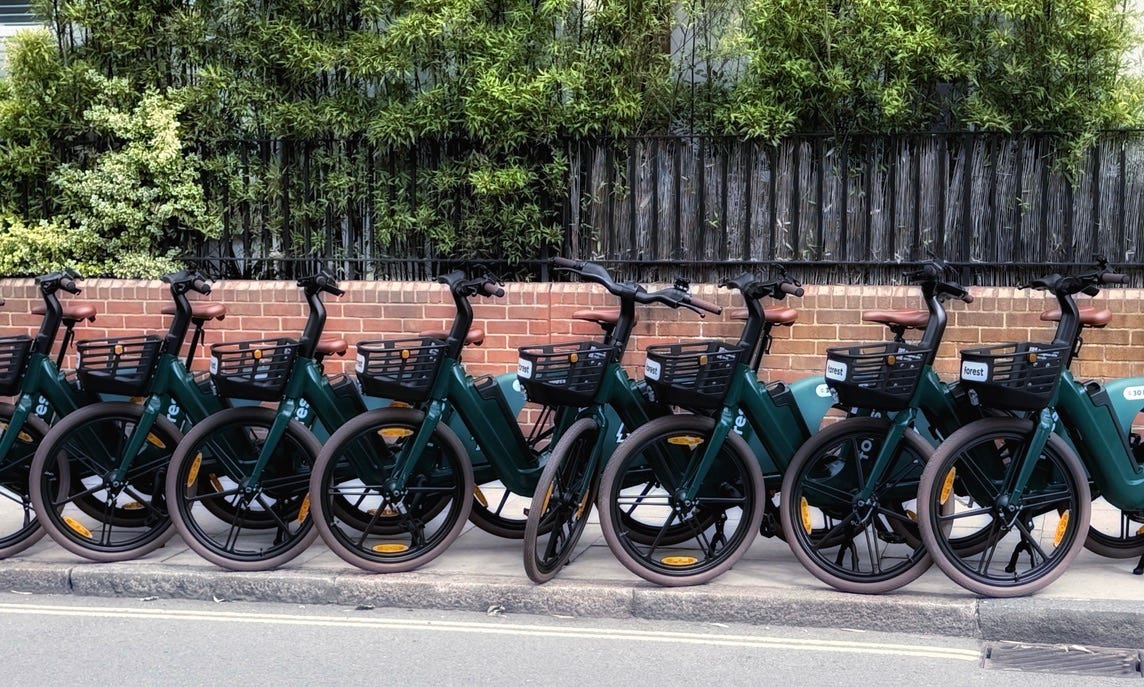
More e-bikes have downsides. This has to be managed. Barnes2050 believes this a transition cost.
The UK spent more than 12 years demanding that new cars be preceded by someone carrying a red flag, and another 18 before the rules were truly relaxed. New forms of mobility arrive messily. Regulation, infrastructure and social norms take time to catch up.
By 2050 - ideally much sooner - we will have sorted out anti-social parking
We know from the experience in Amsterdam, a city can change how it moves. It became car-dominated and then deliberately reversed course.
That process has started elsewhere in London. The City recorded 139,000 cyclists a day in October 2024, nearly twice as many cycles as cars and over half the peak-hour traffic.
What looks normal in Barnes in 2050 may be just as surprising to us as today’s e-bike-filled streets would have been 25 years ago. The difference is that this time we can see the change coming.
Today’s teenagers will be the middle-aged residents, parents and workers of Barnes in 2050. Rather than expect them to inherit our habits, we should be designing partly for the way they want and need to move.
After all, they are already showing us.
Continue exploring: Embrace the e-bike generation
E-bikes could make many more local journeys practical and our younger residents happier if Barnes gives them the space to flourish.
More stories about encouraging e-bikes
Next, how do we change things without knowing whether they'll work?