


Barnes faces its most important decision in decades. Before winter, the UK government is expected to announce whether and how much it will invest in Hammersmith Bridge.
The nature of Barnes for the next twenty years rests on this decision.
Make this active travel bridge safe and residents can look forward and start planning for a future.
Refuse to fund this work and the limbo continues. The Bridge will eventually have to close to everyone including those walking, wheeling and cycling.
Welcome to Barnes2050, a place-based futures project asking: how do we help Barnes - the place and its people - thrive and be climate-ready by 2050? If this is your first visit, you might want to start here.
Money, money, money
The UK government is reviewing the bids for its £1billion Structures Fund. Hammersmith & Fulham (H&F) council is seeking funding for a £128m repair programme to guarantee Hammersmith Bridge can function safely as an active travel bridge, for walkers, wheelers and cyclists. The investment would cover:
Replacing bridge deck and approach deck bearings
Replacing tower bearings at Hammersmith and Barnes
Replacing all suspension hangers
Reinstating the decorative pedestal casings.
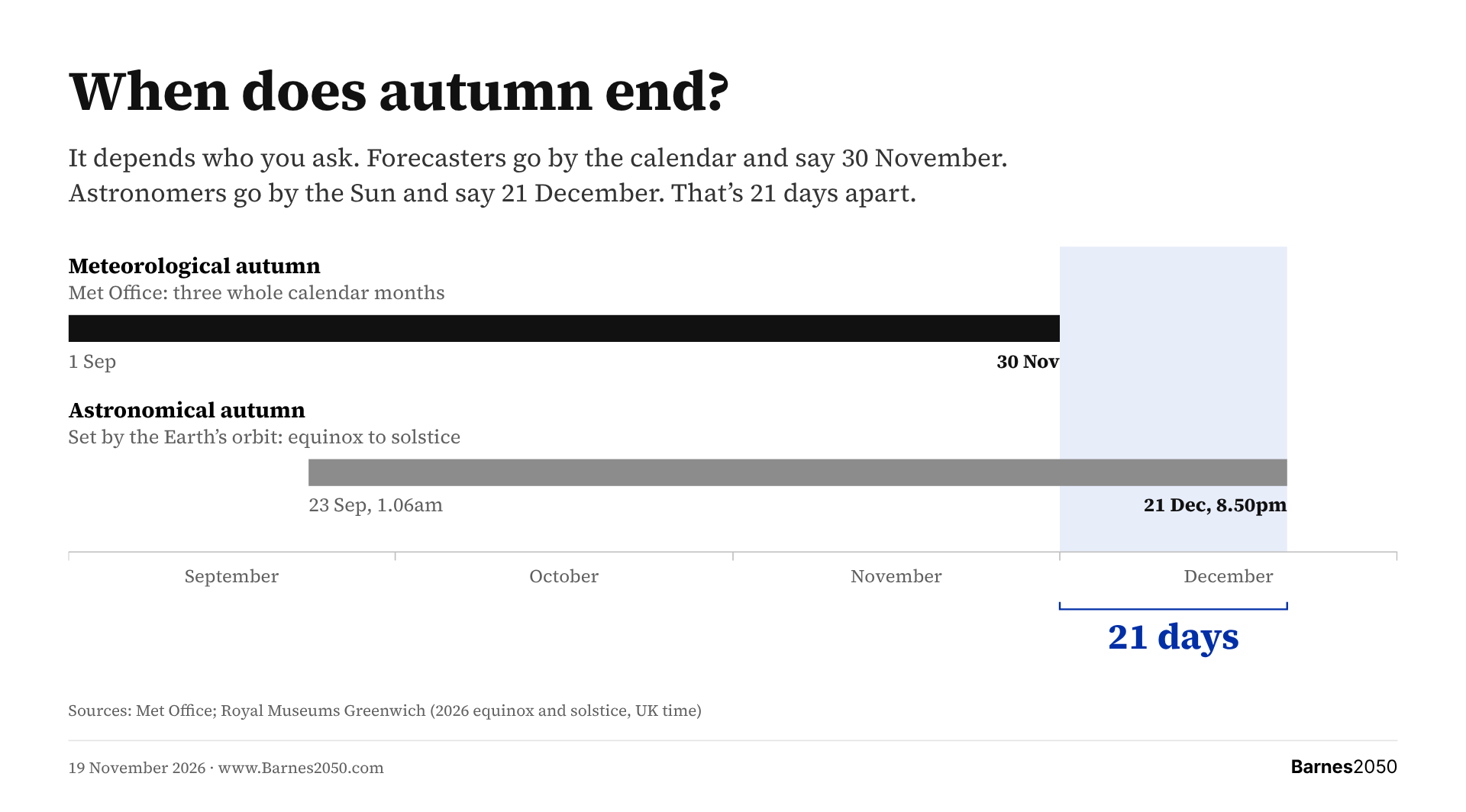
Applications closed on 3 August. The published timetable schedules funding announcements for autumn 2026. The fund covers England, including London, rather than the whole UK.
Successful bidders would welcome the government getting a hurry up. Delivery reporting begins on 1 April 2027, and funded schemes must be completed by 31 March 2030.
Hammersmith Bridge is about far more than a river crossing. It is a question about the future of Barnes. At its heart sit questions of transport, climate, health and community.
Explore Barnes2050’s wider analysis.
Future-facing or lingering limbo?
This looming decision will shape Barnes for a generation.
It’s more important than the launch of the Wetland Centre, now boasting about 150, 000 visits every year. Or the revival of Barnes High Street thanks to the combined efforts of the Barnes Community Association and Richmond council.
The consequences of the UK government’s acceptance or rejection will shape how we live and move around the peninsula for the next two decades.
Alongside acceptance or rejection are two other possibilities, with less clear consequences.
H&F bid is successful
If the UK government provides H&F council with £128m to make good Hammersmith Bridge for wheelers, walkers, and cyclists, it should remain that way for twenty years, provided routine maintenance continues. That was Mark Averill’s assessment when H&F’s Interim Assistant Director for Highways appeared before the London Assembly Transport Committee.
During those 20 years work will, hopefully, continue to repair and update all the Thames’ bridges, a task requiring hundreds of millions of pounds.
But those years will change more than infrastructure. In Barnes, people’s habits will adjust to the settled future. Academic research suggests that support for the new traffic scheme will grow. It’s possible opinion in Barnes has started to shift in the last seven years.

This settled future would allow Barnes to focus on how it wants to live with a car-free bridge. What, for example, to do with Castelnau? Hint, hint. We have to discuss the bus services we deserve. The High Street we need.
We have suffered enough largely unsubstantiated claims, especially from politicians, about support for restoring vehicles to the Bridge. If the government backs H&F’s bid, we need to track public sentiment through the changes ahead, starting with where we are now. Which journeys have become harder? Who has benefited? What would make life work better?
On the face of it, there is little evidence Barnes collectively has suffered so far. That doesn’t mean Barnes won’t be worse off in the longer term.
Whatever the decision, we need to understand the consequences and how best to respond.
Keeping cars off the Bridge has downsides that need addressing.
Take the loss of the regular bus services. A crossing that works well for someone who can walk or cycle can remain a substantial barrier for someone who cannot. Barnes2050 supports trialling the Pod, but we need to understand whether and how it might work. We need to trial this service.
We also need to look at Barnes’s transport system as a whole. The north is car-light; south Barnes, car-heavy. How do we assess the merits of a better system? Road space, crossings, junctions, parking and deliveries can be reconsidered together. The opportunity extends well beyond the Bridge approaches.
We must start gathering meaningful data about life in this part of the world.
If the bid is only partially accepted
This is the continuity decision. Politicians at local, regional and national level have chosen to maintain this limbo for seven years.
H&F’s response to a partial acceptance would depend on the funding offered.
But remember the gist of its bid: making this active travel bridge safe for ‘five years or twenty years’ will cost £128m. Without that investment, ongoing maintenance will eventually be insufficient to keep the Bridge open.
Let’s see if the UK government challenges that assumption.
If the bid is rejected
H&F council has made two things clear. Without the necessary investment, the Bridge will become unsafe. If needs must, it will eventually close it to all crossings.
As Mr Averill put it to the London Assembly,
.. without the investment being made, the Bridge will have to close for safety reasons.
The Bridge will progressively deteriorate until the council must close the carriageway, followed by the footways, cutting off pedestrian, cycle, and river traffic below such as on safety grounds.
Rabbit + hat = cars
An early autumn rash of articles and online discussions raised hopes that the City Bridge Foundation could fund a return to cars.
The attraction is obvious: a wealthy charitable foundation, established to look after five bridges could see its role change to take care of others too.
Could the Secretary of State pull something out of that hat?
The Foundation is not keen. Its chairman has pointed to its existing bridge and charitable commitments: this money already has work to do.
Now look at the task in hand. According to this map of London’s bridges in The Times (££ paywall). Hammersmith is just one part of our ageing crossing infrastructure.
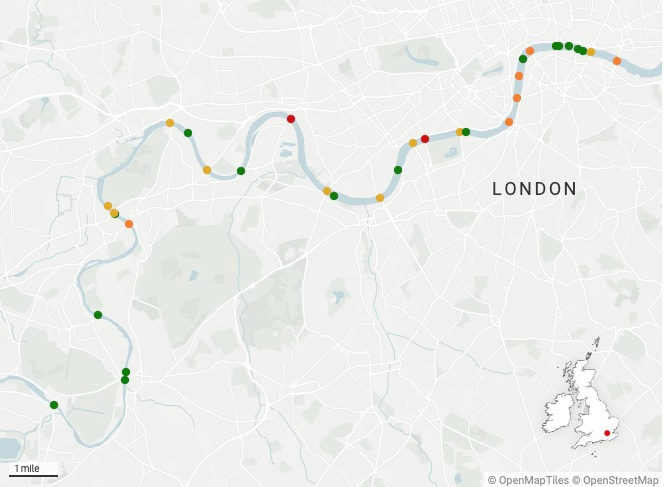
Then listen carefully to the recent London Assembly Transport Committee discussion again. A single body responsible for London’s bridges sounds compelling. The executives’ answers reveal how difficult it would be to agree who pays, who benefits and who takes responsibility for decades of neglected maintenance.
There is also the question of fairness: would a rescue reward councils that neglected maintenance, while those that paid to look after their bridges lose out? Resolving moral hazards take time.
Conservative, Labour and Liberal Democrat politicians have all played a part in creating this mess. Expecting the Secretary of State to resolve it in three months is optimistic.
An alternative funding system may emerge. Barnes still needs a decision on the bid already on the table.
[With Hammersmith Bridge closed] traffic on neighbouring bridges and the wider road network is down compared with before the bridge closed to motor vehicles, while Barnes’s local economy is booming, aided by the e-bike revolution.
There is no credible business case for spending hundreds of millions bringing back polluting, dangerous and exclusionary through traffic. With the mayor targeting a 27% reduction in car traffic by 2030, the priority must be to build on this success, not undo it.
Chair, Barnes Hammersmith Electric Light Transit
Notes and thoughts
The closure of Hammersmith Bridge was the trigger for this project. After two years Barnes2050 hopes Barnes - place and people - to thrive and be climate-ready if vehicles are restored to the Bridge. But it would be so much easier without 20,000 cars cruising Castelnau.
We need to change the way we are talking about the future.
For seven years, Barnes has lived with the consequences of a political stand-off. Residents have adapted whilst the argument has barely changed.
The government should recognise that twenty years of safe walking, wheeling and cycling is a future worth investing in. Hammersmith Bridge does not have to carry cars to perform a valuable role in London’s transport system.
Barnes deserves a sound basis for planning its future. And those whose journeys have become harder deserve practical improvements, rather than another indefinite wait for the old arrangements to return.
Twenty years is a substantial part of anyone’s life. We should not spend it waiting for the next announcement about cars.
If the government provides the money, local and regional leaders have work to do too. A settled future for the Bridge would open up choices about how Barnes changes around it. They need to understand residents’ appetite for those changes: what people want, what they fear and what would make their lives better. Seven years into this upheaval, we should already have that understanding. We cannot enter the next twenty without it.
London needs to fix its bridges. Even Barnes2050 believes some need to carry substantial motor traffic. Hammersmith Bridge has a compelling future as London’s premier active travel bridge. That should be a serious choice, with investment to match.
The £128m bid gives the UK government a concrete proposal on which to decide. If ministers will not back it, they owe everyone who relies on this crossing an explanation of what happens instead.
The arguments have been made. The decision is theirs.
Which leaves just one question.
Read more analysis from Barnes2050 about the future of Hammersmith Bridge.