

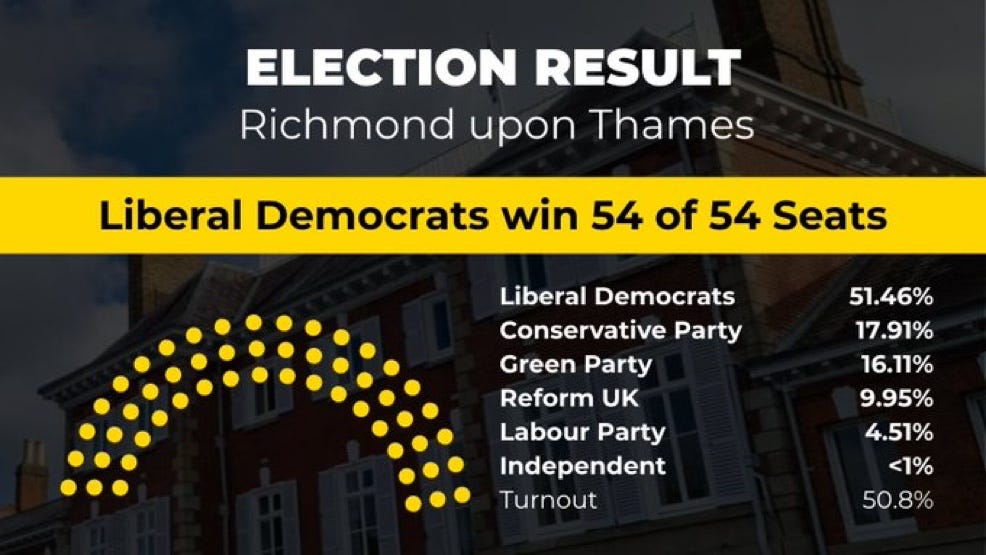
Although there’s a strong international flavour to this review of the week’s news and what it tells us about the future, we start with political news from Richmond borough where residents voted overwhelmingly for continuity.
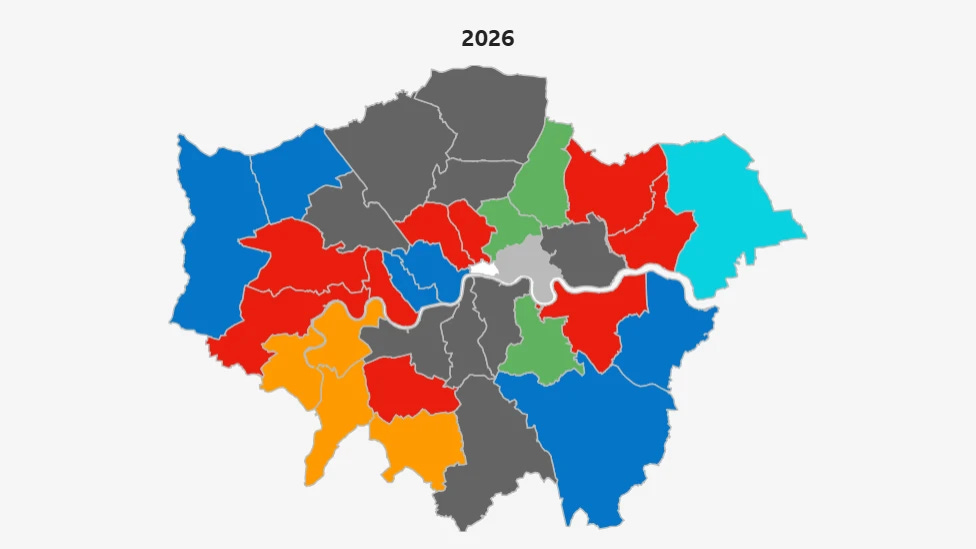
Across London, the political map has shifted, as BBC News explains.
Why it matters
Routine party-political news is rarely the business of Barnes2050. This is different.
We live in one of Europe’s more politically centralised societies. What remains of local government has endured more than a decade of reduced budgets and increased responsibilities. Still, local and regional councils shape the practical stuff: streets, planning, housing, trees, schools, transport, air.
The Liberal Democrats have a renewed mandate to continue the administration they began in 2018.
If you have not already done so, time to read the Liberal Democrat manifesto to see what is in store. If you want help assessing this, then why not use the emerging Barnes2050 Manifesto.
A weekly digest of stories and signals about future Barnes.
Climate - Good news on renewable energy
Simon Clarke reports on the numbers for solar and wind in 2025.
Three points stand out.
Clean energy growth, led by solar and wind, is now close to meeting the world’s rising demand for electricity.
Falling battery prices are making solar power easier to store, helping shift daytime supply into the evening peak.
Geopolitical shocks are speeding the move towards secure, domestic renewable energy.
Why it matters
By 2050, much of everyday life is likely to be electrically powered: homes, transport, work, heat, tools, perhaps almost everything.
Increasingly, that electricity looks likely to come from renewables.
The faster we get there, the better. Energy security improves. Costs become more predictable. The climate benefits.
This is another report suggesting the electricity transition is move faster than many expected and on the right track.
Climate - Lessons from .. USA, on shuttering a city?
Oliver Milman reports the process of relocating people from New Orleans should start immediately, because climate change could push the city beyond a ‘point of no return.’
Southern Louisiana is facing 3-7 metres of sea-level rise and the loss of three-quarters of its remaining coastal wetlands, which will cause the shoreline “to migrate as much as 100km (62 miles) inland”, thereby stranding New Orleans and Baton Rouge, according to the study, which compared today’s rising global temperatures with a period of similar heat 125,000 years ago that caused a rise in sea level.
This scenario makes the region the “most physically vulnerable coastal zone in the world”, the researchers state, and requires immediate action to prepare a smooth transition for people away from New Orleans, which has a population of about 360,000 people, to safer ground.
(Via Bill McKibben)
Why it matters
Whatever President Trump and his supporters claim, they will not be able to ignore - were it to happen - losing one of the world’s iconic cities to climate change.
Climate denial has always worked best in the abstract. Cities are not abstract.
One can only hope the US Federal Government manages this better than it managed the aftermath of Hurricane Katrina.
Transport - Lessons from .. USA, on NYC pausing Waymo trial
New York City has not renewed Waymo’s license to trial its vehicles, which expired at the beginning of April.
The city’s new mayor, Zohran Mamdani, said his city government was ‘committed to delivering for the workers that keep the city running’ including its taxi drivers.
(Via BikeIsBest)
Why it matters
Automated vehicles (AVs) have an air of inevitability. Quite why is not always clear.
New York is a useful reminder that technology does not simply arrive. It is regulated, shaped and occasionally resisted.
Cities still have choices.
Welcome to Barnes2050, a place-based futures project asking: how do we make sure Barnes - the place and its people - is thriving and climate-ready by 2050?
Transport - Cars should wait longer at traffic lights
The Daily Mail reported,
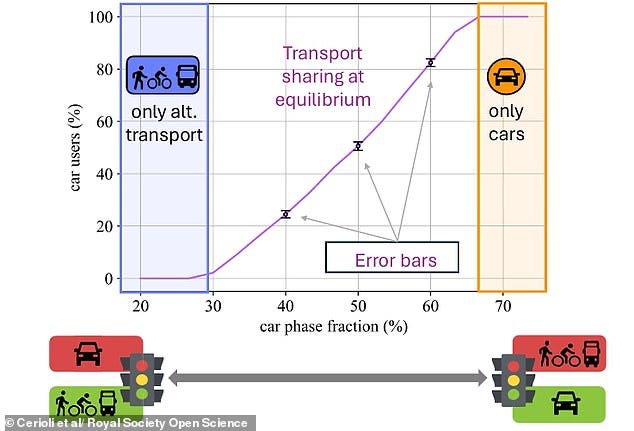
Your commute is about to get even worse: Woke scientists say cars should be made to wait at red lights for longer - to force people to switch to walking.
Why it matters
This is welcome research. As one of the researchers is quoted as saying,
Our simulations show that modest reductions in car-prioritised green time shift commuters toward walking, cycling, and public transport without costly infrastructure changes
Woke scientists, eh?
Transport - Lessons from .. America, on car culture
Jason Slaughter catalogues the many harms of America’s preferred transportation monoculture.
And The Guardian provides a useful summary of the headline choices facing those who want to stop cars choking our cities.
Why it matters
The UK and USA went their separate ways many years ago, when it comes to cars and their role in society.
But it is important to keep an eye on developments there for two reasons:
Their influence occasionally seeps across - think SUVs or AVs, see above
We need regular reminders about what not to do.
Infrastructure - New walking, wheeling and cycling bridge to open shortly
It’s in Nottingham and it should be celebrated.
This is the Waterside Bridge.
Why it matters
There are relatively few high-profile bridges of this kind in the UK.
The list includes the Millennium Bridge (no cycling) and Hammersmith Bridge in London, Gateshead Millennium Bridge connecting Gateshead and Newcastle, Peace Bridge in Derry/Londonderry NI, Diglis Bridge and Kepax Bridge in Worcester and Stockingfield Bridge and Govan–Partick Bridge in Glasgow.
Another new bridge in one of our great cities helps normalise walking, wheeling and cycling as real infrastructure, not lifestyle garnish
By comparison, Copenhagen in Denmark boasts a rich network of bike and pedestrian bridges such as Folehaven Bridge, Lille Langebro, Inderhavnsbroen, Cykelslangen and Bryggebroen
Infrastructure - Streets are better with trees
(Four) Pictures are better than a thousand words.
(Via CreateStreets)
Why it matters
Barnes needs to treat heat and water as equal threats
This affects almost everything in the public realm, including street furniture
Shade is no longer a pleasant extra. In a hotter city, it is civic infrastructure
A tree is not a decoration. It is part of the operating system
Economy - Lessons from .. Amsterdam, on outdoor advertising
Amsterdam has become, according to the BBC, the world’s first capital city to ban public advertisements for both meat and fossil fuel products.
Since 1 May, adverts for burgers, petrol cars and airlines have been stripped from billboards, tram shelters, and metro stations.
Why it matters
Sometimes it takes someone or somewhere to ban something to remind you of what you already possess
Barnes has relatively little outdoor advertising. No large billboards. Walk down Mortlake towards Mortlake Green to see what we are missing. The most visible ads are on bus shelters, and there are only a few of those.
Barnes2050 would like it to stay that way. It is one of the ways the village remains distinctive.
Civics - This is me, according to ChatGPT
I use Ai to help create this journal. Mine is an ‘Ai in the loop’ approach.
After twelve months of regular engagement, I asked ChatGPT how it would describe me in fewer than 100 words.
What follows is the unedited answer.
Andy is a thoughtful local futurist disguised as a blogger. He lives in Barnes, south-west London, and has become slightly obsessed — in a productive way — with what climate change, transport, housing and technology will mean for one particular urban village by 2050.
Professionally, he carries the instincts of a seasoned public-service journalist and R&D strategist: curious, evidence-driven, sceptical of easy answers, but still optimistic that places can improve through experimentation and civic imagination.
He thinks in systems, notices small signals before most people do, and has a habit of turning seemingly niche local issues — a bridge closure, a zebra crossing, shade at a bus stop — into wider arguments about how we live well together.
Stylistically, he wants clarity over jargon, persuasion over outrage, and ideas grounded in real streets, real trade-offs and real people.
I’ll take that.
If you prefer, this is the (my) human-crafted description of my career and the origin story of Barnes2050.
Air conditioning in a climate-conscious home

I’m still working out how I feel about air conditioning. After three heatwaves already in 2025 - and more likely on the way - it’s a question I will need to address.