

This is the fourth of the Barnes2050 Principles: ideas intended to help make choices about how Barnes SW13 develops between now and 2050.
Barnes will change. The question is not whether change happens, but what criteria we use when choosing among competing changes. So far, the principles have said we should design Barnes for people first, not cars; prioritise getting buses and vans moving; and embrace the e-bike generation.
As the Barnes2050 Manifesto develops, these principles will inform proposals intended to help Barnes, place and people, thrive and be climate-ready by 2050.
Some ideas will work. Some won’t. The problem is finding out which before spending too much money, causing too much disruption or making something difficult to reverse.
Welcome to Barnes2050, a place-based futures project asking: how do we help Barnes - the place and its people - thrive and be climate-ready by 2050? If this is your first visit, you might want to start here.
Principle 4 - Test new thinking with purpose, regularly
Choosing an idea is one thing. Finding out whether it actually works is another.
Richmond council has a structured approach to trials. Look at its management of the Barnes Primary School Streets. Barnes Primary is operating under an Experimental Traffic Order with baseline monitoring, consultation and subsequent review before a decision to amend, remove or make the scheme permanent.
Barnes already experiments. We just don’t necessarily think of these things as experiments. A School Street, a Parklet and an extraordinary flood-resilient road look like completely different projects. But they share something: try something, observe what happens, learn, decide what comes next.
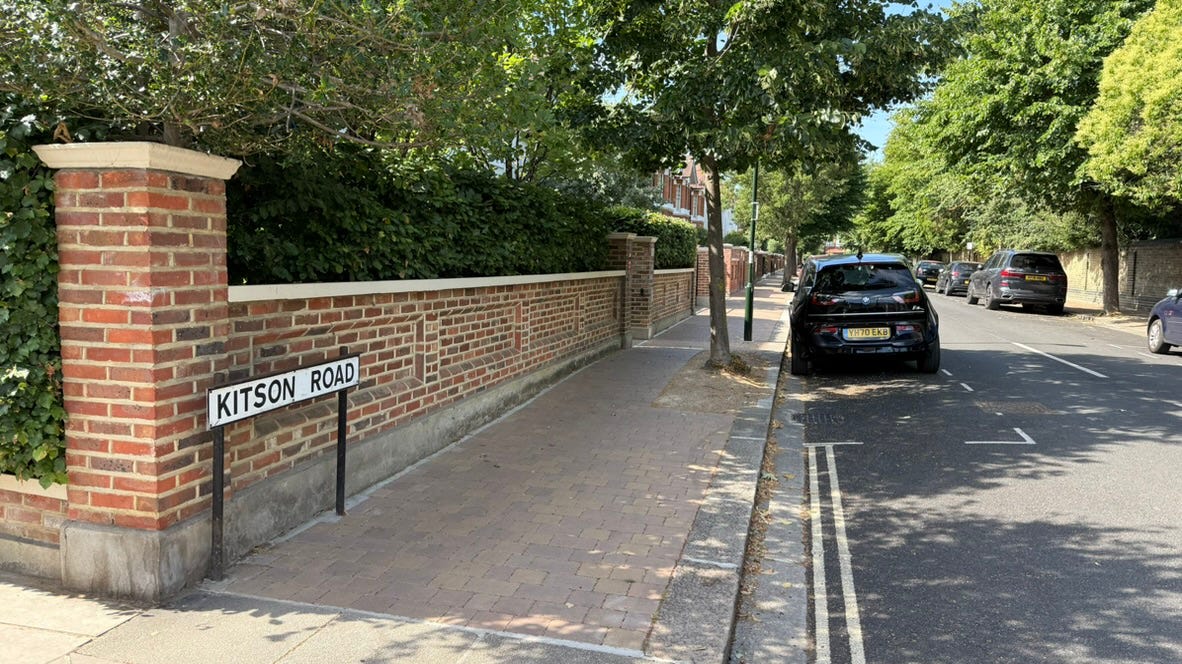
Kitson Road is the definition of modest radicalism. Could it be any more Barnes? Richmond’s first fully permeable public road, stores more than 100 cubic metres of water beneath the surface and is intended to reduce flood risk to 25 properties. It was explicitly delivered as a trial through Community BlueScapes.
Some residents will struggle with this way of managing change. Sometimes things can look a mess. Think of those garish signs and temporary traffic lights littering the landscape. Trials can force people to change long-held habits. Even a temporary structure can be disruptive, especially annoying if the trial proves the idea doesn’t work.
But that is the beauty of this approach.
Better to find out something is not working as planned having spent a few thousand pounds rather than few hundred thousand or a million. Better a few temporary sandbags and road-signs than permanent changes to the hard-landscape.
Proponents of change need to be honest going into a trial. A trial isn’t simply a temporary version of something you have already decided to do. They need to accept something wont work as they hoped.
Maybe closing part of The Terrace for the Boat Race is daft. Maybe the service challenges will be too much for the proposed BHELT pods.
They also need to be clear how the trial will be judged. A successful trial will gather useful information so the planned change can be improved. The trial itself will alert more people to what might be ahead.
After twenty years practising this approach professionally, on projects large and small, I have become a firm believer in testing ideas before committing to them. Not because every trial works, but because you nearly always learn something when it doesn’t.
Barnes cannot know in 2026 which ideas will prove right for 2050. Nor should it wait until it does. Try things. Decide beforehand what success looks like. Learn from what happens.
Keep what works. Change what doesn’t.
Continue exploring: Test new thinking purposefully, regularly
Barnes should trial is now ideas before implementing them, learn from the results and adapt accordingly.
More stories about testing new thinking purposefully.
Next, using local renewal to build for the climate we can expect.